Showing posts with label parenting. Show all posts

Thursday, January 26, 2017

Emma Asks a Question
Emma Asks a Question

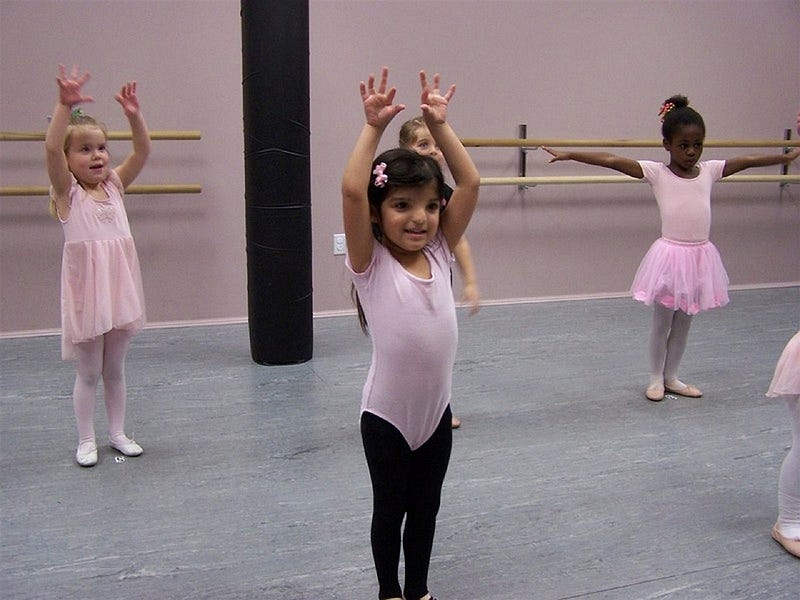
none of these girls are Emma (Pixabay download)
I’ve written about Emma before: She is six years-old and in kindergarten.
Like all grandchildren, she is curious, brilliant, beautiful, funny, intelligent and amazingly perceptive. More than most, she is very fortunate.
She has two loving parents and six (count them) attentive grandparents. Her aunt and uncle live near by and she gets along well with her cousins. Her parents have good, stable, interesting jobs. She lives in a very nice house, with a nice yard, in a friendly town, with a very good school system. She is secure, happy, makes friends easily and certainly feels free to express herself; a lot.
The town she lives in is only a few miles from Boston. It participates in the METCO program which brings children from Boston to many of the suburban schools for the purpose of exposing everyone to different cultures. It was established in 1968 and has been very successful.
I was there for dinner the other night, and after we all agreed on what, and how much she and her two year-old brother would eat, Emma chirped up and asked the following question:
Why are all the kids who get on the city bus all different colors while the White kids all get on the town bus?
Everyone’s first response was “Wow, that’s a really good question. You really notice a lot of things.”
Her mother, who had finally sat down to eat said “ That’s an important question and the answer to that is very complicated.” She then mumbled something about institutionalized racism, and let the rest of us try to give Emma and answer. My wife, who Emma calls Nanny, told her that not everyone gets to go to a school as good as hers, so some kids come from the city so they can go to her school.
I tried to explain it a bit more by telling Emma, in my best eight year-old language (she’s only six, but you know how precocious our own grandchildren must be) that not everyone is as lucky as she is. Many people never get the chance to live in a house like this, in a town like this, and go to a school like hers. Then I added that “some people don’t give people who are a different color as much of a chance to do everything they want.
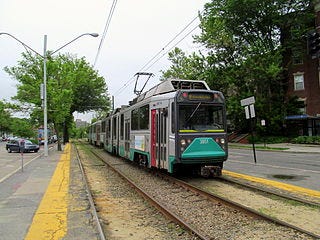
As Emma respond to that with a look of total confusion her brother announced that he wanted to play with Thomas (his train) and the usual dinner chaos resumed. I did Keep Emma’s attention long enough to tell her that very soon, I would take her to see parts of the city where some of the kids on the city bus live. That way she could see how it is different, and how they get along. She seemed very interested in taking a field trip like that, especially since it would probably include ice cream. Her brother would love it if we went on the trolley.

But we really haven’t answered Emma’s question. She did go to the Women’s March in Boston last Saturday. She was a bit overwhelmed by the size of the crowd, but people seemed so happy she was there that she felt safe and a part of what was going on. She had made her own sign on a piece of construction paper that read: “Hello. Are You Good or Bad?” The answer to that question will have a huge impact on her life. We are hoping to minimize the bad.
Still, we are left with the problem of having to explain to a happy, secure, privileged six year-old that she is a member of a flawed species. Even after 200,000 years of some kind of civilization, people still have a great deal of difficulty trusting people who look and act differently, All of our new, amazing technology has not yet lived up to its potential of making life better for everyone.
How to we tell her, without scaring her half to death, that several of her great-great aunts and uncles were murdered in Europe seventy-three years ago because they read the wrong books. How do we explain to her why the parents of her new friends who get on the city bus would like to have a job like her father, but they never seem to get them. And it probably isn’t because they wouldn’t like to work there or they couldn’t do the job. It’s just because…… it never seems to happen.
She knows that all the women in her family, her mother, her aunt, and all her grandmothers, all have or had good jobs, and were all in leadership positions. She expects that this will be in her future; right now it would be running a hair salon.
These questions have become even more important during this time of Trump. It is a time when the President talks about whole groups of people as scary, and that they shouldn’t be let into this country, or they should be thrown out. He Tweets mean things about people who disagree with him, and he tells new lies every day. People on TV are always talking about those lies.
Maybe we just tell her that there are many people right here in America who think that their money is more important than other people’s lives, and she had better learn to make and keep her own money, and the hell with everyone else. If she wants to, she can hire some poor folks as body guards and pay them $8 an hour plus benefits, and they’d be happy for the benefits.
But we don’t want to say that, because we don’t want it to be true. It was easier to tell her about what was happening when we thought these things were getting better. Now we will find away to tell her that we, along with everyone she saw at the march, are working to make the backlash to the backlash happen. And that most people really care about people, and are working to make things better for everyone, all around the world. We will show her that rooting for America is not like rooting for the Patriots, because in life, it’s much better when people help each other than when they try to make winner and losers. (And most people hate the Patriots because they win so much).
We can already tell her that she is doing her part, just by doing what she is doing and being good friends with the kids who get on the city bus. She doesn’t know why that’s such a big deal, and really, it isn’t. But it’s good, and it helps, and it will make things better.
The rest is up to us. We have to be the adults in the room. We have to work hard to get rid of the bigoted, the bullies, the greedy and the liars. We have the resources, the knowledge, the technology and the skills to do so. We just have to put in the effort, and show Emma, and all the kids of her generation, that we care about them, all of them.

Saturday, January 07, 2017

Dancing with Emma

Dancing with Emma

(not Emma, just a free download)
Six year-old Emma (not her real name) came bounding home from kindergarten. She greeted me with a big hug and then, holding my hands, she climbed up my legs, planted her feet into my chest and did a back-flip to the floor. Next, she grabbed my hand, pulled me to the computer and clicked on a page of a children’s book to show me how well she can read. She typed out “I love you. Come and play with me tom…” she began to ask me how to spell “tomorrow” but the word popped up on the screen, so she just had to push a button to complete the sentence. “Print ” she said, and a copy of her invitation slid out of the printer.
Next, she opened a program that showed the two of us on the screen as it took a video. She tapped the keyboard and mirror images of us dancing appeared. She tapped it again and tiny red hearts fluttered between the two of us. Another tap produced blue birds flying in circles around her head. With a push of two more keys we are watching the video she had just made and she asked me what song to play in the background. “It’s the end of the world as we know it, and I feel fine” came instantly to my mind.
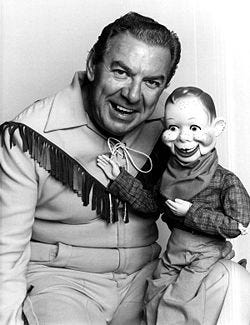
Emma is my granddaughter. She is growing up in a world that constantly offers her new possibilities. She is delighted and excited, unaware that at her age it was amazing for me to see Howdy Doody through a friend’s window, after climbing up a four floor fire escape. She has TV, Apple TV, On Demand, an iPad, with many learning apps, games and videos, and an Echo She rides in a car that changes lanes and parks itself. She also has books, blocks, paints, markers and crayons.
Emma is fortunate to have loving parents who have a good relationship, good jobs, and a supportive extended family (not just me). She is living the upper-middle class American life, with too much stuff, and too many choices. Still, she seems to handle it well. She has been learning the old skills, such as reading, coloring and pumping a swing, and also the new ones that I struggle with, mostly with technology. Of course, when she gets hungry, cranky and tired, nothing works to her satisfaction.
My granddaughter was born three years after the first iPhone was sold. YouTube was already showing 14 billion videos a month. Since her birthday the CSRP-R gene editing technique has been developed, which will eventually eliminate many birth defects, and perhaps help her design her own child. Nanotechnologies are being developed which will deliver medicines directly into cells. There have been improvements in battery technology, solar collectors, and more wind farms have been built which will offer new sources of energy. The Internet of Things has connected our houses with our shopping, our calendars, our friends, or banks, and music. Both Google and Amazon have learned more about us than we know about ourselves. Several of Emma’s friends were conceived in a petri dish and have two parents of the same sex.
But also, the polar ice caps continue to melt at an increasing rate. Refugees are fleeing war, poverty and drought and overwhelming the more developed countries. Reacting to that, many of those countries are retreating behind nationalistic, xenophobic governments. There is a terrorist attack somewhere almost every week that receives a great deal of attention, and keeps everyone fearful. The threat of cybercrime, hackers and international cyber-warfare seems to increase every day, especially as the new U.S. President seems to enjoy being provocative.
What guidance can I give to Emma besides just “be a kid and have fun?” which I think is still the most important advice a GrandPops can offer. There are so many things she probably won’t have to learn that were so necessary for my survival. She won’t have to learn to write, as she can already type, or even dictate, to a machine and it will write it for her, in any font, color or style she chooses. She adds emojis to clarify the emotion. Or, she can just make a video and skip verbal communication altogether.
I had to learn arithmetic. Then came calculators. Now Emma just asks Siri or Alexa or Google to give her the square root of 2345 (48.3252, I just asked). She can jst ask for any information: who the President was before Lincoln? or how far it is to the moon? What is a quark? These things would have taken me hours, or even days to find — if I knew where to look.
By the time she is old enough to get a driver’s license she probably won’t need to drive. She can ask her electronic assistant, (R2-D2?) to order a self-driving Uber. By then the “assistant” will know her schedule and have it waiting for her.
Will she go to college? What will college be like by then? Will most of it be on-line and channeled right into everyone’s homes? Will her classmates be from all around the world, and they will meet in small groups by putting on a Virtual Reality headsets? Will the “class” be taught by her electronic assistant? Will people still go to an actual college campus for two years just to leave home, network, have parties and consensual sex?
What will she do after college? Half of the adult women she knows are doctors, work for Google, or a bio-tech company. The other half stay home with their kids, wear Lulu Lemon all day, drink wine and make organic snacks. Will she seek a job growing genetically modified crops to feed the world, or make an augmented reality app which inspires children to grow up and take care of their grandparents? Perhaps, by the time she is fifty, everyone will be working only six hours a week and receive a guaranteed annual income. The rest of the work will be done by robots, and most of the decisions will be directed by algorithms and artificial intelligence. I think about this as Emma and I dance to the rhythm of a beatbox app that thumps out a strong base line.
All of this could happen within the next five to fifty years. It’s difficult to tell how fast it will come. Some of it will work and some won’t. It’s exciting. It’s frightening. What is clear is that the transition won’t be smooth. People resist changes, even when they would be beneficial.
Will this be a world that offers freedom and prosperity to all? A world in which everyone will have the security, education and skills to be creative, caring, and healthy? Will most people find ways to live the lives they choose; lives that are fun and fulfilling? It could be a world in which people will feel connected and enjoy being together. We are social animals. We feel better in supportive relationships.
I have too many doubts. I have worked closely with all kinds of people for my entire career. I have seen how some people quickly take advantage of other people’s weaknesses. Emma has already told me that some of the girls in her kindergarten class are mean to other girls. Some girls always push to be first. Others boast about having new things that other kids don’t have. She has also told me that she was frightened when one boy pushed someone down. Another boy got so angry that he threw a block across the room.
I know too well that humans have limitations. We are still a primitive species. Almost all of us are basically good and kind, but we can change quickly if we feel threatened. We have evolved to be very sensitive to all possible threats. That’s how we have survived. We have to recognize immediately if whatever is rustling in the bushes thinks we are a friend or food. One wrong reaction could mean we won’t get another chance. Humans are irrational. We count on our emotions to guide us.
It makes me wonder if all of this new technology and easy access to all kinds of information will be shared equally, or if it will be proprietary, and sold to those who can pay for it. There is the hope that these algorithms can help people make better decisions about what to eat, how to spend money, how to resolve conflicts, and will help everyone enjoy the benefits of scientific advances. There is the fear the the same technology can be used to manipulate people, influence their thoughts and divide everyone into classes of exploiters and exploited. This seems to be what humans have done for centuries.
How do I explain my concerns to a six year-old as we dance to Ariana Grande, and she askes why I don’t let her watch the video? I have done a pretty good job of passing my values down to both of my children, and they, and their spouces, are all good parents of their children. I want my grandchildren to be caring, curious and creative. I want them to be open to new ideas and new people. I want them to be able to experience the satisfaction of working to make the world a better place for everyone. And yet they have be aware that there are people who would take advantage of them, and others who could harm them. They have to learn whom to trust and whom to drive away.
Emma will have so many more choices than were available to me. Choices of how to live, where to live, who to be with, how to communicate, places to travel, where to work and how to work. Hopefully, medicine will be better; many more diseases will be treatable or eliminated. I’ve read that Emma’s life expectancy is 103.
Despite all of the new technologies, new discoveries, and new realities, there is one skill that we need to teach all of our children, a skill that we can’t allow machines to do for us, and that is critical thinking. This ability is what will determine who survives and thrives. More than even our children have to learn how to determine what is real from what is distorted. They have learn how to get as close to the truth as possible, especially when it shows that something they believe is wrong. They have to be able to evaluate which, of all these new technology offerings, is really useful for them, and which are manipulative or just distractions. We all have to realize that we are emotional and what really separates us from all of the new technology is that we care.
How do I teach Emma to be open and curious, yet questioning and skeptical? I want her to feel that the world is fascinating, friendly and fun, and yet to realize there are real dangers. She shouldn’t be frightened, but she needs to be aware. I want her to have the confidence in her own skills and her own judgement, so that she knows how to take care of herself.
So we start with the basics. She should learn to trust me, her parents and others who really care for her. She should understand why we tell her not to eat too much candy or jump off of tree limbs. She should know why the moon and sun appear to be the same size, but they’re not. Learn how to meet new people and assess what’s going on, like when she asked, “What’s it called when you say something that’s not true, but you think it’s funny? Oh yeah, sarcasm.” She needs to learn what it means to have a friend and to be a friend.
As she demonstrates good judgement we can let have more freedom. She can learn that making mistakes is important, because that is part of the way we learn.
As she develops her own skills of critical thinking and cause and effect, she can see that life can be fun, fascinating and satisfying. She can make her way through the world and decide where she wants to go, what she wants to do and with whom. Good values, good judgement and behavior are what constitute a worthwhile human being. The more Emmas there are, the better the world will be.
Hopefully, she will remember how much her GandPops cares for her, and she will keep in touch with him. She can show him what’s cool, and we can dance.

Monday, September 14, 2015

Adjusting?

I've been back on this side of the bridge for over a week, but I'm still not good at it. I am reuniting with friends and family who are part of the world, but it's not going that well. Tomorrow will be my first day going back into my office, and I'm wondering what it will be like.
i hope it helps me settle in and get reoriented.

i contacted several people who had told me they wanted to see me in my office.  They all seemed really pleased with the idea.  I was flattered, but I was a bit confused.  What is it that I do?

I spent a good part of today remembering, and I think I've got it down.

I had a great summer.  The time passed quickly and mostly without thought.  I was active, outside, moving around.  Friends came, the kids came, we all moved around together.  We ate, We drank, We hung-out.  As I said, the world on the other side of the bridge was free and light and happy (unreal).

This world is crowded, fast and busy.  It always has been.  But now, after a break like this, it seems crazy and frantic.  Every body's moving fast but things go so slowly. Every one's a little pissed-off because they can't get enough done.  They can't get enough done because few people agree on what the priorities are: Get out of my way! Leave me alone! Listen to me!

Build a road, build a bridge, take the kids to day-care. Go to war, don't go to war.  Vote for this clown, vote for that elitist.  Change the world, but pay the mortgage first.  Give the kids supper.

Sit in traffic, sit in the meeting, but be creative, be innovative. Think of the Next New Thing, watch football, but put the kids to bed first.

It's confusing to me because I don't need to do any of that any more.  I can sit and read fairy tales and watch TV re-runs.  It's more difficult to see the sun set around all these building.

But I do help put the kids to bed -- no fussing!! I do have to pay the bills, and tomorrow I will go to my office and see some folks.  I have been wondering how they are doing.  I hope I can ease them in the right direction.

I still don't have any sessions planned with the three lonely, more than a little crazy, women over sit-five, who really don't trust anyone in the world, except maybe me, sometimes. But they all called, wondering if I'm coming back.  Why did I come back?

I also have another project I am starting that will change the entire delivery of mental health services!!
Because now that I'm on this side of the bridge I feel like I have to do something.  Even if it means sitting in traffic and sitting in meetings.

I'll let you know how it goes after tomorrow.

Sunday, February 19, 2012

Parenting fuss

Again, a new wave of books about how to raise you kids.  It all mostly began with Dr. Spock, who did a pretty good job. Since then there have been thousands, some have been decent, but most have been terrible.  Many have been very harmful. Many are really no more than political polemics created to develop true believers.

But now we are living in a time when the pressure on kids to grow-up quickly and learn the right skills is greatly magnified.  If you don't have a strong, sophisticated education it will be difficult to find a job or to create one for yourself.  Robots now do the kind of work that kept millions of people employed thirty years ago. Kids have to not only learn how to do things well, they have to do things better than others.  Harvard and MIT have only so many seats each year. Be strict, be tough, teach your kids to focus, to learn, to succeed and achieve. Fun will come for the satisfaction of achievement, play will come at 55.

Predictably, in three to five years there will be another huge pile of books written that will refute the ones coming out today.  Any parenting style that goes to any extreme may work for some kids, but will fail for most.  Every kid is different, every parent is different, every family is different and every time period is different. 

Parenting is wonderful, and should be the most engaging and productive thing that anyone does with his or her life.  But it involves a lot of time and a very delicate balancing act:

Independence but with structure
Fun and Happy, yet internalized delay of gratification
Achievement through pleasure, achievement through work
Intellectual development; emotional intelligence
Firm but Fair
Organized sports, or disorganized play
Discipline yet with Emotional self-regulation!
Learn the rules, but learn to think for yourself.
Solve problems traditionally, solve problems creatively
Play, roam, waste time, watch TV, make-up games, be a pain in the ass

A parent has to slowly instill all of these things in a smiling, running, teasing, messy, fussy, naturally playful totally innocent child.  I remember when my kids were young that as soon as I could determine out how much freedom and independence they could handle, they had grown and changed and their stage of life was different, the challenges they faced were different and I had to begin all over again.

I know that it is more difficult today with so much information, so much stimulation, so many more ways of measuring, and what seems to be much less time.

The one basic rule:  Pay Attention!!!

What seems to have improved is that Grand parenting is much easier and a great deal of fun.