Showing posts with label social justice. Show all posts

Saturday, May 06, 2017

Other Choices/ Other Realities/ More Questions

Way back in 2015 I was feeling swept along by a rapid river of changes. So many new ways of communicating, learning, moving, building and exploring were all coming at me at once. I was concerned that the changes were so pervasive and affected so many aspects of our lives that we have been unable to keep track of them. Most of us were just trying our best to act as if we know what we’re doing. All the while we were in the midst of realizing that in order to survive we would need to develop new skills. How we relate to each other is also changing, as cultures from all over the world merge and new lifestyles emerge. In many ways, we are changing our bodies, brains and minds, both directly and indirectly.
As my interest in all of these innovations grew I became excited, and wanted to be a part of the whatever the future would bring. I began to read books and articles (see below), attend conferences and trade shows, and learn about new companies.  All of the people I met were extolling how we would soon have our lives transformed at the touch of a screen or just by uttering a command or asking a question. I began to believe that these changes would have more of an impact on our lives than just the thrill of capturing animated warriors, who were posing virtually, in the park across the street.
Fantastic!
I was eagerly anticipating driverless cars, a cure for Alzheimer’s, genetically modified tofu that tasted like Boston cream pie, enriching relationships with new people from all over the world; new, cheap, sustainable sources of energy, and more time with my grandchildren.
But in the Spring and Summer of 2016 the clouds began to form as the political landscape began to dominate the forecasts and darken the future . There seemed to be a resentment growing and an anger brewing in many people. These people began to feel overwhelmed. The changes that I found so exciting, they felt were ruining their lives. People began to express how uncomfortable they felt with new people and the new lifestyles. They were unclear if it was the Chinese, Mexicans or robots taking their jobs. They were not happy that it often took pushing buttons on three remotes to find the TV show that used to be there if you pushed one “on” button. And where has Bill O’Reilly gone?
People seemed to want to stop, or at least slow down, the flow of these changes and reestablish the sense of security that came with living with what felt familiar, even if that feeling only came from nostalgia and nothing that really ever was.
But the pace of change has not stopped. New things quickly began to get old and newer new things were arriving. Every next thing seemed more complex and different, and whatever it did, it did it faster than before. New books kept coming, and so did web sites, articles, studies and ideas. But now, the tone began to change. There were questions raised about whether these new things were really bringing insight, knowledge, ease, comfort or joy. People began to focus on the downside of all of these changes. Who were these new people? Is Artificial Intelligence smarter than I am? How did so many people know I needed a hub cap? How do they know what kind of medicine I’m taking? Who else knows so much about me? Can I trust the new information I am being given? Can I trust my employer? Can I trust my government?
We are learning, once again, that every new technology that humans develop brings many changes, and they all come with mixed results. This has been true for fire, axes, wheels, agriculture, gun powder, internal combustion engines, plastics, nuclear energy, Twinkies, digital computers, the Internet, and now CRISPR, Artificial Intelligence and Deep Learning.
Like all of those innovations, there has never much discussion about how and when to use these new tools. There have been very few times in the history of human civilization when any planning or preparation of this kind has been done. What usually happens is that a group of creative folks come up with something new. Sometimes, if they’re in the right spot at the right time, it either fills a need or creates it’s own need. Then other people figure out different ways to use it. Some of those ways work and sometimes it blows up. Clear examples of this are the internal combustion engine and the iPhone.
But soon after every innovation, the same kinds of societal difficulties begin to appear
Who gets to own it and control it?
Governments, Corporations? Individuals?
How much power does it bring to whoever controls it?
Who gets to use it?
How much does it cost, and who gets the money?
Who else is necessary? Who gets included? Who gets excluded?
Usually, the ones who develop whatever is new get to profit and to control it’s distribution and use, at least for a while.
Then, if it becomes a very powerful tool, it gets taken over by a government or corporation. If the developer is powerful and well managed, such as Apple or Ford, then they keep their advantage for a while. They get to make the market and attempt to ward off competition. The public has to pay for it, or not have it.
Problems almost always arise because the distribution and use of whatever is new and powerful is never equal across any society. The new advantages almost always go to those who had the old advantages; those with the power, access and money. This creates anger and resentment in those who are left with old tools to deal with new problems. If you are left with your horse and buggy or a land-line, you suffer.
What adds to today’s confusion, is that many of the new tools and machines that have been designed to bring us a marvelous new future of happiness, creativity and freedom, are also being used to distract, manipulate and control us. Tools are just tools, whether they are axes or Deep Learning. They can be used to cut up firewood, or chop off your hand. They can be used to treat your medical problems or change your political beliefs. It depends upon who can get them, who knows how to use them, and what their goals are.
There has never been a successful way to limit or plan the usage and distribution on any new technology. Occasionally, a government will decide that it must be the one to control something. That is usually true for any major military item, from a tank to a nuclear weapon. But we are seeing that even those can fall into the hands of non-governmental fringe groups, as so many “independent” military suppliers exist around the world. Thankfully, so far, it has not happened for nuclear weapons.
Another factor is that the confusion creates more confusion. One of the major new creations has been instant world-wide communications. Everything changes so quickly, and everybody knows about it immediately. An idea can spread so fast that is difficult to sort out all of the interpretations of what is happening. Everyone has an opinion that is usually based on partial facts. Communications run through many channels at once. Often what comes out is distorted or incomprehensible. Eventually, the truth becomes clear: “Meet the new boss/Same as the old boss.” (trite but true)
The ideal, the “mission statements” behind many of these new developments, is to make the world a safer, healthier, smarter, and more harmonious place for everyone. But that requires a complex set of skills that our species has talked about for a few thousand years, but is yet to show that it is capable of performing. This includes caring about people we don’t know, sharing with those who don’t have as much, and the other ideas from the enlightenment, such as freedom, justice and equality for all. Those are my values, revised to really include everyone. I’m not ready to give up on them.
I’ve seen those things written down in a few places, but it seems as soon as there are a few dollars left unguarded on the table, the ideals seem to vanish.
But perhaps, maybe, this time, we can devise the right algorithm that can lead enough people in the right direction, and convince both the rich and greedy, AND the angry and confused, that if things are better for all of us, then things are better for all of us. And if you need a yacht that badly, you can still have it.
We are at a tipping point. The future still looks cloudy. We all will have an influence, either active or passive.

*     *     *     *     *     *     *     *
Some of the Books that are relevant:
Thinking Fast and Slow, Daniel Kahneman, 2011
The Gene Machine, by Donnie Richmond, 2017
The Body Builders, by Adamd Piere 2017
To Be a Machine, by Mark O’Connell, 2017
Our Grandchildren ReDesigned, by Michael Bess, 2016
Homo Deus, by Yuval Harari, 2017
Thinking Machines, by Luke Dormehl, 2017
Heart of the Machine by Richard Yonck, 2017
From Bacteria to Bach and Back, by Daniel Dennett, 2017
The Inevitable, by Kevin Kelly, 2016
From the Web:
Oliver Cameron’s transmission about the technologies of self-driving cars
Backchannel, on Medium
Future Tense, ASU and Slate
Mate Labs
The Who

Many, many others

Monday, February 20, 2017

This City, At This Time


We are down south, but not really in the South.
We are in the big city that is almost another country, but isn’t.
Many, perhaps most, people here speak another language, many languages.

I am high up in a high building.  I can sit and watch the planes come out of the clouds and coast to the airport.
I can watch the boats glide down the bay and wait for the drawbridge to open.
I see the sunset turn the windows blazing red on the tall towers across the bay.

Rows of forty and fifty story steel and glass towers line the water for miles.
All with balconies that almost no one is on, except for me, and a couple of people who sneak out to smoke.
Along the bay these towers are two, three, or four rows deep.
They are building more all over the city; higher ones to peek over the older ones. The noise of construction, the banging, the beeping, the grinding goes on from eight to five, everyday except Sunday.
The money for these buildings comes from all over the world.
The money finds a safe home here. It is safer, at least for now, than it is in Venezuela, Brazil, Peru, Colombia, Mexico, Egypt, Turkey, Russia or China, or any country with oil.

Four blocks away from the bay the houses are one, two or three stories tall.
There are neighborhoods, some are going through transitions as the poor immigrants are being pushed away. Younger, more hopeful, but not yet prosperous people are moving in. 
These neighborhoods are vibrant, with night life going on late.
Cafes overflowing on the streets full of men, drinking and talking, making deals.
Designing businesses, designing designs, writing, playing music.
Flirting with women.

Women too, are now talking, drinking wine, designing, making deals, building businesses
Smiling as the men flirt with them.
The men and women who have come from the other cultures, live in these neighborhoods.  They dress beautifully, they present themselves to the world with a sense of presence and style.
This is a city.  The people have to have a style, a sense of themselves to be a part of it.
But this is not Brooklyn or Boston.  It is warm here.No big coats, sweaters, or flannel shirts,
Bodies are clearly on display, and they look good. Often very good. Certainly to an old man.

Walk around the corner and you have to step over a man sleeping on the sidewalk with his head resting on his backpack.  You won’t step on him because you can smell him a few feet before you see him.
If you pass a dark alley a young man with vacant eyes may step out and ask you, in a voice that you strain to hear, for a couple of dollars, just so he can survive.
He makes you feel uncomfortable and it’s very awkward, as you realize what it must take to ask like this. Even if he is just hustling he can’t be very good at it because he looks so lost and frail, but he still human.  So I give him a couple of dollars realizing that my wife just spend $15 on a glass of wine at the very good, hip restaurant in this transitional neighborhood, and our Uber will arrive in two more minutes to take us back to the tower that overlooks the bay.

In the building by the bay live hundreds of people from hundreds of places, speaking dozens of languages.  Riding the elevator early in the morning you ride down with people going to work. They are dressed in everything including sharp business suits, short dresses and very high heels, fine jeans and fancy tee-shirts, and hospital scrubs.  Everyone is cheerful, everyone is a little more than polite, they are friendly. Many know each other, and like being together.

Half an hour later the elevator is full of people with their dogs. Mostly women with very small dogs.  Many of the dogs are in their own strollers.  One women had four little white dogs in her stroller, all barking in slightly different tones

Later in the day, the old people are doing laps up and back in the pool, many using styrofoam floatations to help them along in their exercise programs.  Inside, in the elevator, as I got on with my three year-old grandson, a man joined us.  He stood about six-foot-five, with broad shoulders and a trim waist. His skin was the color of a frappuccino. He wore expensive business casual. His dreadlocks flowed down below his shoulders.  He spotted at my grandson, who immediately hid behind my legs. The man smiled and said, “Hey, is that Lightening McQueen on those shoes.”  The kid stepped out from behind my leg and spoke in his barely comprehensible english, “Yes, these shoes go very fast.”

Later, as the sun begins to set, it is Happy Hour all over the city. Since it is warm, or hot here, almost everything happens outside.  Families gather on the decks, in their backyards, or together in the neighborhood. They cook old recipes that have come from many different lands and have been modified by each generation that has been here. In the bars, cafes, restaurants, many that line the water ways, the people begin their evenings, sitting, conversing, and laughing. Many gather in family or ethnic groups, but also many in very diverse groups of people who work together, create together or just play together.  This is what helps the city grow, change, and evolve into whatever it needs to be. The world changes from here.

The TVs on the wall show mostly soccer games from Europe or Brazil. There are basketball games of the local team and local colleges.  There is also the news channel, but not the one they watch in Indiana.
On the news channel is our President, raving that he is treated unfairly. He is telling us he is making us safer, and he is the best that there ever was.
The people here who watch him are nervous.  They fear that he will deport their friends for no reason, to countries they have not been since they were six. He will deport these people to make the people living in Arkansas feel safe.  The people in Arkansas, twelve hundred miles away somehow feel threatened by the people in this neighborhood.  They feel that way because the President told them they were dangerous. None of these people look or act dangerous. Well, some of the women might be dangerous, but not in a way that would threaten Little Rock.

Away from the towers of steel, glass and balconies many of the neighborhoods are crumbling.  Many of the streets are full of potholes and with crumbling houses and littered lots.  They have found a way to distract people from the rubble by painting beautiful murals all over the city.


The schools struggle for funds, and face the huge task of having to educate people who speak so many languages, and have so many needs.  I do not live here so I don’t know the politics, but I’m sure it’s complex, and probably doesn’t work that well.

This is a very American city, but it is not typical, because everyone city is unique. This city will grow unless the sea continues to rise and covers it over.  What it will become is not yet clear.  Like every place around the world, it seems as if those who are already doing well will benefit the most.  Those a step away will strive toward to join in the prosperity, with a few making it. The rest will struggle in the shadows of the towers, living lives of increasing difficulty. This is the way it has been since cities first formed.  The castles were on the top of the hill. The garbage and the sewage flowed down. Why should it be different now?

Perhaps because we don’t need slaves and surfs or peasants any more to support the kings, dukes and earls.  We don’t even need kings, dukes and earls any more, although many people seem to pretend to royalty, certainly in their own mind.

Now we have robots. We have Artificial Intelligence, and sophisticated algorithms that can help run all our lives. We even have democracy, so that everyone can be a part of choosing our future.  
At least we made an attempt at it.  

Like this city, it still needs a lot of adjustments.

Thursday, January 26, 2017

Emma Asks a Question

Emma Asks a Question

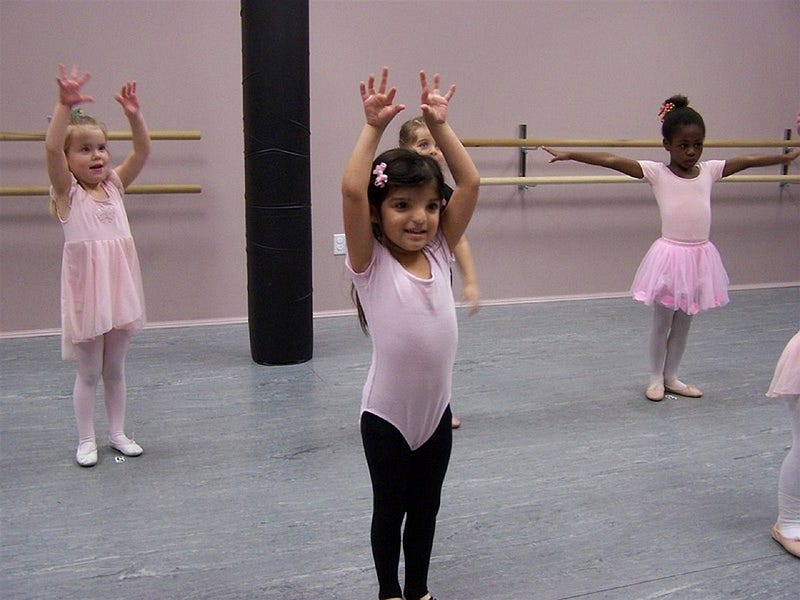
none of these girls are Emma (Pixabay download)
I’ve written about Emma before: She is six years-old and in kindergarten.
Like all grandchildren, she is curious, brilliant, beautiful, funny, intelligent and amazingly perceptive. More than most, she is very fortunate.
She has two loving parents and six (count them) attentive grandparents. Her aunt and uncle live near by and she gets along well with her cousins. Her parents have good, stable, interesting jobs. She lives in a very nice house, with a nice yard, in a friendly town, with a very good school system. She is secure, happy, makes friends easily and certainly feels free to express herself; a lot.
The town she lives in is only a few miles from Boston. It participates in the METCO program which brings children from Boston to many of the suburban schools for the purpose of exposing everyone to different cultures. It was established in 1968 and has been very successful.
I was there for dinner the other night, and after we all agreed on what, and how much she and her two year-old brother would eat, Emma chirped up and asked the following question:
Why are all the kids who get on the city bus all different colors while the White kids all get on the town bus?
Everyone’s first response was “Wow, that’s a really good question. You really notice a lot of things.”
Her mother, who had finally sat down to eat said “ That’s an important question and the answer to that is very complicated.” She then mumbled something about institutionalized racism, and let the rest of us try to give Emma and answer. My wife, who Emma calls Nanny, told her that not everyone gets to go to a school as good as hers, so some kids come from the city so they can go to her school.
I tried to explain it a bit more by telling Emma, in my best eight year-old language (she’s only six, but you know how precocious our own grandchildren must be) that not everyone is as lucky as she is. Many people never get the chance to live in a house like this, in a town like this, and go to a school like hers. Then I added that “some people don’t give people who are a different color as much of a chance to do everything they want.
As Emma respond to that with a look of total confusion her brother announced that he wanted to play with Thomas (his train) and the usual dinner chaos resumed. I did Keep Emma’s attention long enough to tell her that very soon, I would take her to see parts of the city where some of the kids on the city bus live. That way she could see how it is different, and how they get along. She seemed very interested in taking a field trip like that, especially since it would probably include ice cream. Her brother would love it if we went on the trolley.


But we really haven’t answered Emma’s question. She did go to the Women’s March in Boston last Saturday. She was a bit overwhelmed by the size of the crowd, but people seemed so happy she was there that she felt safe and a part of what was going on. She had made her own sign on a piece of construction paper that read: “Hello. Are You Good or Bad?” The answer to that question will have a huge impact on her life. We are hoping to minimize the bad.
Still, we are left with the problem of having to explain to a happy, secure, privileged six year-old that she is a member of a flawed species. Even after 200,000 years of some kind of civilization, people still have a great deal of difficulty trusting people who look and act differently, All of our new, amazing technology has not yet lived up to its potential of making life better for everyone.
How to we tell her, without scaring her half to death, that several of her great-great aunts and uncles were murdered in Europe seventy-three years ago because they read the wrong books. How do we explain to her why the parents of her new friends who get on the city bus would like to have a job like her father, but they never seem to get them. And it probably isn’t because they wouldn’t like to work there or they couldn’t do the job. It’s just because…… it never seems to happen.
She knows that all the women in her family, her mother, her aunt, and all her grandmothers, all have or had good jobs, and were all in leadership positions. She expects that this will be in her future; right now it would be running a hair salon.
These questions have become even more important during this time of Trump. It is a time when the President talks about whole groups of people as scary, and that they shouldn’t be let into this country, or they should be thrown out. He Tweets mean things about people who disagree with him, and he tells new lies every day. People on TV are always talking about those lies.
Maybe we just tell her that there are many people right here in America who think that their money is more important than other people’s lives, and she had better learn to make and keep her own money, and the hell with everyone else. If she wants to, she can hire some poor folks as body guards and pay them $8 an hour plus benefits, and they’d be happy for the benefits.
But we don’t want to say that, because we don’t want it to be true. It was easier to tell her about what was happening when we thought these things were getting better. Now we will find away to tell her that we, along with everyone she saw at the march, are working to make the backlash to the backlash happen. And that most people really care about people, and are working to make things better for everyone, all around the world. We will show her that rooting for America is not like rooting for the Patriots, because in life, it’s much better when people help each other than when they try to make winner and losers. (And most people hate the Patriots because they win so much).
We can already tell her that she is doing her part, just by doing what she is doing and being good friends with the kids who get on the city bus. She doesn’t know why that’s such a big deal, and really, it isn’t. But it’s good, and it helps, and it will make things better.
The rest is up to us. We have to be the adults in the room. We have to work hard to get rid of the bigoted, the bullies, the greedy and the liars. We have the resources, the knowledge, the technology and the skills to do so. We just have to put in the effort, and show Emma, and all the kids of her generation, that we care about them, all of them.

Tuesday, October 11, 2016

Fancy Tools - 1

1.

This will come as no surprise to any of you but I am writing these words on a laptop computer.  I am sitting at my desk at home but I could be in my office at work, or in a local coffee shop, or in a hotel lobbying Boston, or a hotel lobby in Mumbai, or the airport in Timbuktu.  Most of the world is not at all surprised by this, but my twenty year-old self would have been writing with a pencil in a spiral notebook, misspelling twenty percent of the words.
In a few paragraphs I will cite some research done by Dr. Dietrich Stout, of Emory University, who is a neuro- anthropologist, a profession that did not exist ten years ago.  I first read about his research in a magazine, but when I wanted to learn more I just clicked on a search engine and I was connected to 364,00 references to him in .53 seconds.  I’m sure that none of this is surprising to any of you, but again, when I was in college, way back when the world was colder, the Celtics were champion every year and Bill Russell was paid $100,001 for the season, I may still have received a magazine describing Dr. Stouts’s work.  But to learn more I would have had to go to the library and search through the stacks and hope to find the right anthropological journal among the hundreds of journals in the library.  Now of course, here are thousands of journals, and almost all of them are accessible in .53 seconds, right here where I am sitting.
Clearly, my computer is a tool, a complex, electronic tool that is connected to a power source. One of the distinctive behaviors that have differentiated humans from other species is our ability to make tools.  We are not the only species that can do this, but we have certainly taken this concept further by far than the crow who uses a stick or the orangutan that uses a rock.  Birds can fly, but we have built planes.  Whales can live under water for hours, people can stay under water for months. As far as we know there is no other species that uses calculus. 
We have reached the level of tool development at which tools are totally interwoven into every aspect of our lives. It has become impossible for us to live the lives we do without them.  We live in homes that are heated and cooled.  We move from place to place in cars, boats, trains and planes.  We use tractors to plant our food and huge harvesters to bring in in from the field. There are refrigerated trucks and planes that ship the food all over the world. We have drugs to kill harmful bacteria, and drugs to keep our hearts beating and drugs to relieve pain. Yes, there may be some people who try to live their lives “off the grid,” but it is impossible for them not to be affected by those whose lives are lived on the grid, even if it is just the negative effects of climate change and pollution.
This brings us to Dr. Stout’s work. He has been studying what happens to people’s brains when they learn to use tools.  He is starting at the beginning.  He is watching what happens to the  brains of people when they learn to make and use the first tools that humanoids made 500,000 years ago, which was before our species, homo sapien, emerged. He has been teaching himself and many students how to make stone axes. He is using more sophisticated tools to watch the changes that occur in their brains as they learn. First he used FDG-PET,  fluorodeoxyglucose positron-emission tomography, then he used an MRI , magnetic resonance imaging, to explore how learning to make tools improved the brains of our ancestors. 
Dr. Stout and his colleagues have been able to show that learning a new skill, a skill that is difficult to learn and takes a great deal of practice, will produce changes in the brains of people of any age. These are the kinds of changes that once they are learned, give the person an adaptive advantage.  The people who learned to make and use axes had a better chance of surviving than people who didn’t.  These people also learned to show others whom they associated with, their tribe, how to make tools, and that gave the whole tribe an advantage, and so their society changed, along with their brains.
That is what is happening today.  We are all learning to use new tools, and new tools are being invented and created at a much faster pace than they were 500,000 years ago. Obviously, the rate of change is much faster.  We will not wait another few thousand years to turn an axe into a spear, or a car into a driverless car.
The speed of creation of new tools has been greatly amplified because we now build tools to build tools.  In order to build new planes we first write software programs to write software to design the programs to build the planes. We have already built the computers to run the software. Our lives have become so involved with our tools that the most important skill a person needs to live well and prosper is to be able to control the tools.  However, in many ways, it now often seems as if our tools have such a strong impact on our lives that they control us.
Our tools, especially the electronic ones, have greatly accelerated the speed of change, and this will continue to accelerate due to the changes it creates.  The electronic tools we create help us make those tools faster, help us aggregate more data, which helps us find more patterns and create new algorithms, which shows us more options.. These options are communicated at an increasing speed to everyone and anyone who will make use of that information to create new tools.

If they have not already, these tools have changed the way almost everyone on earth lives their lives.  Jobs have shifted all over the world because people who are in company headquarters in New York can know instantly what production is going on in China, how quickly the product can be shipped to Denmark, and how much money will be sent to the bank in London.  Money itself is only an electronic blip on a screen, and can move at almost the speed of light.
This kind of instant, world wide communication has changed how people meet, learn about each other, and in many cases mate and start families.  I have had several patients who have made friends with people thousands of miles apart, sometimes on other continents. Based on virtual communications they have decided they are in love and have left what they considered boring, unfulfilling lives to seek love and romance miles away.
Yes, several have been swindled and fooled and have returned broke and broken hearted.  But I have seen several people who have found what they had hoped for, or at least enough of it to begin new lives.  One woman left Massachusetts for Hawaii, another young woman had a young man come from Alabama, and another woman began a romance with a soldier who was in Iraq.  He came home wounded, had his leg amputated and a prothesis put one, and then they got married.
All of this would have been very difficult before 2005, when Facebook began, and helped the world to keep in touch.  There were dating sites earlier than that, Match began ten years earlier, but by 2005 a huge portions of the world was on the Internet.  In 2007 the first iPhone was sold. The world, and our brains, have been changing rapidly ever since.
If learning the skill to make a stone axe changes the shape and connectivity of a person’s brain, what does learning to write computer code do to the brains of young, or old, coders?  Is the shape of my eighteen month old my granddaughter’s brains altered as she learned to take my smart phone and push the right spots on the screen to find Elmo? If getting a ping on the corner of your field of vision every twenty seconds alerting you to some new bit of information, one of which may make you change the entire piece of work you’ve been doing for two weeks because this new piece of information says that three old pieces of information are now deemed questionable, what does that do to your brain? or blood pressure? your emotional stability?


The biggest impact of the rapid development of all of these electronic tools has been on our ability to expand our knowledge about who we are, how the world works , and even the universe that we live in.  Since the beginning of the new millennium more has been discovered and learned in every field of science than had been known in the previous four thousand years.  A research question that could never have been asked thirty years ago can now be answered in a week, sometimes in seconds.  So much of wha I learned in college and graduate school is now considered obsolete, or just plain wrong because so much of it was based on speculation, or the best possible guess, when now we have very clear data.  
It is often pointed out that the warehouse size computers that were used to guide the first moon landing did not have the computing power of an iPhone 5.  If we use all the tools we now have we could solve almost all of the world’s problems such as hunger, climate change, water distribution and disease.  The obstacles that remain are financial and political. We are still searching for tools to help interpersonal relationships, and then to get people to use them.


Many questions keep floating into my consciousness: Is this what we want? How can we choose? How can we adapt to these changes?  What skills will be necessary to live and prosper in this new world?  Who will possess those skills?  What about all the rest of the people?