Showing posts with label human behavior. Show all posts

Thursday, January 26, 2017

Emma Asks a Question
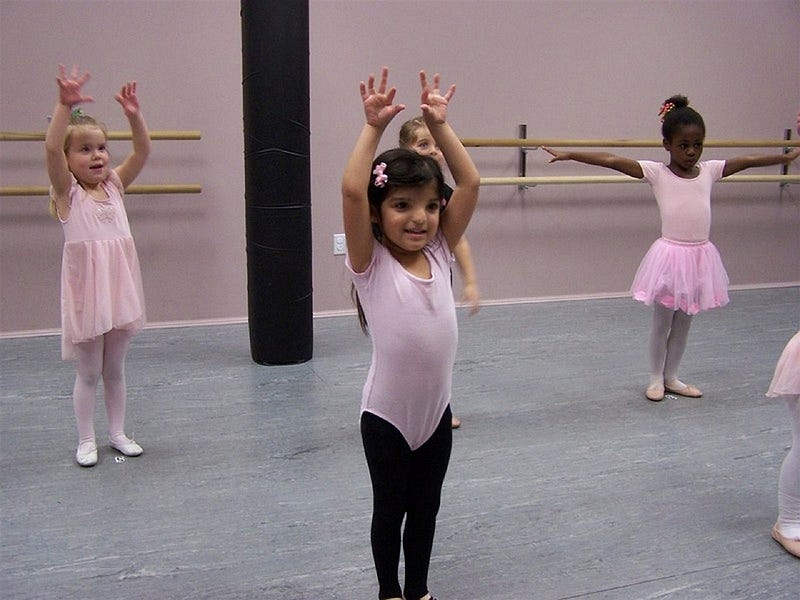
Emma Asks a Question

none of these girls are Emma (Pixabay download)
I’ve written about Emma before: She is six years-old and in kindergarten.
Like all grandchildren, she is curious, brilliant, beautiful, funny, intelligent and amazingly perceptive. More than most, she is very fortunate.
She has two loving parents and six (count them) attentive grandparents. Her aunt and uncle live near by and she gets along well with her cousins. Her parents have good, stable, interesting jobs. She lives in a very nice house, with a nice yard, in a friendly town, with a very good school system. She is secure, happy, makes friends easily and certainly feels free to express herself; a lot.
The town she lives in is only a few miles from Boston. It participates in the METCO program which brings children from Boston to many of the suburban schools for the purpose of exposing everyone to different cultures. It was established in 1968 and has been very successful.
I was there for dinner the other night, and after we all agreed on what, and how much she and her two year-old brother would eat, Emma chirped up and asked the following question:
Why are all the kids who get on the city bus all different colors while the White kids all get on the town bus?
Everyone’s first response was “Wow, that’s a really good question. You really notice a lot of things.”
Her mother, who had finally sat down to eat said “ That’s an important question and the answer to that is very complicated.” She then mumbled something about institutionalized racism, and let the rest of us try to give Emma and answer. My wife, who Emma calls Nanny, told her that not everyone gets to go to a school as good as hers, so some kids come from the city so they can go to her school.
I tried to explain it a bit more by telling Emma, in my best eight year-old language (she’s only six, but you know how precocious our own grandchildren must be) that not everyone is as lucky as she is. Many people never get the chance to live in a house like this, in a town like this, and go to a school like hers. Then I added that “some people don’t give people who are a different color as much of a chance to do everything they want.
As Emma respond to that with a look of total confusion her brother announced that he wanted to play with Thomas (his train) and the usual dinner chaos resumed. I did Keep Emma’s attention long enough to tell her that very soon, I would take her to see parts of the city where some of the kids on the city bus live. That way she could see how it is different, and how they get along. She seemed very interested in taking a field trip like that, especially since it would probably include ice cream. Her brother would love it if we went on the trolley.


But we really haven’t answered Emma’s question. She did go to the Women’s March in Boston last Saturday. She was a bit overwhelmed by the size of the crowd, but people seemed so happy she was there that she felt safe and a part of what was going on. She had made her own sign on a piece of construction paper that read: “Hello. Are You Good or Bad?” The answer to that question will have a huge impact on her life. We are hoping to minimize the bad.
Still, we are left with the problem of having to explain to a happy, secure, privileged six year-old that she is a member of a flawed species. Even after 200,000 years of some kind of civilization, people still have a great deal of difficulty trusting people who look and act differently, All of our new, amazing technology has not yet lived up to its potential of making life better for everyone.
How to we tell her, without scaring her half to death, that several of her great-great aunts and uncles were murdered in Europe seventy-three years ago because they read the wrong books. How do we explain to her why the parents of her new friends who get on the city bus would like to have a job like her father, but they never seem to get them. And it probably isn’t because they wouldn’t like to work there or they couldn’t do the job. It’s just because…… it never seems to happen.
She knows that all the women in her family, her mother, her aunt, and all her grandmothers, all have or had good jobs, and were all in leadership positions. She expects that this will be in her future; right now it would be running a hair salon.
These questions have become even more important during this time of Trump. It is a time when the President talks about whole groups of people as scary, and that they shouldn’t be let into this country, or they should be thrown out. He Tweets mean things about people who disagree with him, and he tells new lies every day. People on TV are always talking about those lies.
Maybe we just tell her that there are many people right here in America who think that their money is more important than other people’s lives, and she had better learn to make and keep her own money, and the hell with everyone else. If she wants to, she can hire some poor folks as body guards and pay them $8 an hour plus benefits, and they’d be happy for the benefits.
But we don’t want to say that, because we don’t want it to be true. It was easier to tell her about what was happening when we thought these things were getting better. Now we will find away to tell her that we, along with everyone she saw at the march, are working to make the backlash to the backlash happen. And that most people really care about people, and are working to make things better for everyone, all around the world. We will show her that rooting for America is not like rooting for the Patriots, because in life, it’s much better when people help each other than when they try to make winner and losers. (And most people hate the Patriots because they win so much).
We can already tell her that she is doing her part, just by doing what she is doing and being good friends with the kids who get on the city bus. She doesn’t know why that’s such a big deal, and really, it isn’t. But it’s good, and it helps, and it will make things better.
The rest is up to us. We have to be the adults in the room. We have to work hard to get rid of the bigoted, the bullies, the greedy and the liars. We have the resources, the knowledge, the technology and the skills to do so. We just have to put in the effort, and show Emma, and all the kids of her generation, that we care about them, all of them.

Wednesday, October 14, 2015

On World Mental Health Day we....

It Was World Mental Health Day.

I began  blogging on World Mental Health Day, which was Sunday, October 10.  I was too late to add the code to get the sticker, so I won't attract hundreds of new readers who want to learn my views on such an event, but that's Okay, as I'm not clear what my views are.

I'm not sure what we are supposed to do on World Mental Health Day anyway. I guess be mentally healthy.  I didn't finish my bog post that day because I stopped typing and watched football and then went out with some friends.  I'm not sure how mentally healthy it is to watch American football.  I don't really think it's a good idea to watch people literally bash each other's brains out, but this year the Patriots are really good and fun for me to watch.

If Mental Health Day was a fund raiser, I don't know who the money should go to.  There are lots of places doing research, but the findings seem to be all over the place.  Also, the entire body of research done on mental health treatment was called into question in an article in the New York Times last week.  The article stated that most of the studies that get published are the ones that show good results.  the studies that show small, no, or even negative results are not deemed that helpful so they don't get into major journals.  Therefore, the body of evidence is skewed to the positive.

Mental and emotional difficulties have very varied and complex causes.  Most of the studies show small things, such as spending too much time sitting in a cubicle, typing insane blog posts, is not good for your emotional health. Psychology offers a lot of little answers to basic problems: how to control your anger, how to get your child to study, ten ways to relieve stress -- mostly why situation X will lead to behavior Y.  Most of these are interesting and helpful, but they don't put it all together, they don't cover everything that is going on in a person's life. What if your in pain? What if you don't have the money? What if your kid is sick? What your boss is on the phone?  What if you have asthma?  What if all of these things are happening at once?  Why can some people handle this and others fall apart.  Why do some people fall apart when the waves hit their ankles and others can keep swimming when the water is up to their neck?

It's complex.
It is.
Be aware of that.
Be understanding.

It's (was) World Mental Health Day.

Tuesday, July 14, 2015

Epigenetics - 1

So much information comes pouring in, even when I’ve just been chasing the grandkids across the beach at low tide. I don’t turn on this computer as much any more, because, like most people these days, it seems to be too big and slow compared with all of the mobil devices that I take with me in a plastic bag. Still, so man new, exciting things are happening -- as well as the constant flow of repetitive atrocities and financial manipulations. 

Some of the new information came over the weekend in the very low-tech way, through newspapers.  Because of the glitch in the analogue delivery system we received three papers, one from New York, one from Boston and an extra from Cape Cod.  The Cape Cod gave us local facts and weather, and also a story and picture of a woman who had gone to high school with my son.  She was doing well here on The Cape, except she still had loads of student debt.  Too bad; student loans were another good attempt to put a band-aid on a severed leg. The unintended consequences  soon were mixed with a bit of good old American fraud and deception, and now it’s a crisis.

The NYT Magazine had a lead article by Susan Dominus about two pairs of identical twins who were somehow mix-up 26 years ago and raised as fraternal twins by the two different families.  The four men found each other through a series of connections and are being studied by geneticists and also epigeneticists.

The article focuses mainly on the reactions of the young men, and how they responded differently to the very confusing situation.  It raises the questions of who we are, and what it is that shapes us.  All that nature/nurture stuff.

Although this happened due to a drastic error in a rural medical system, it is relevant  now due to the increasing amount of ways in which families can be formed.  These days, with different kinds of marriages, and so many step-families, and people changing sexes, or just having difficulties having children, the laboratory is an increasingly major factor in the creation of people.

Repeatedly, over my long years of doing psychotherapy I have often  been frustrated by  feeling that I am working with someone whose emotional reactions to certain situations are way beyond what should be expected, even given some difficult situations.  I spent hours working with Lady R, who was very anxious, and saw possible danger in everything.  She did well in therapy, as she was thoughtful and very open to reassurances.  Long after we stopped our visits she would call me after a bad night of fears.  I would spend about fifteen minutes on the phone with her and she would be fine for six months. But i always had the impression that she was being knocked over by the waves of her life, even though they never came up as high as her knees.

By contrast, I have seen people who had awful family histories of physical and emotional abuse, as well as living in poverty, and yet these people were workers and survivors.  It was not as if their lives were without struggles or limitations, but they had developed coping mechanisms that held them steady when the waves of their lives where twelve feet high and threw them against the rocks.

Obviously, we all have genetic differences that shape our personality.  Since the turn of this millennium there has been an amazing amount of work sorting out the kinds of genes that play a part in predisposing each of us toward various emotional sensitivities, or lack of them.  The results of the Human Genome Project, and all the technology that has been developed to explore those areas has opened up vast new ways of adding dimensions to what influences how we all think feel and act.

However it has, somewhat surprisingly,  been discovered that this connection of genes to behavior is much more complex, and much less cause and effect than what was anticipated at first. It has become very clear that even if genes are identical in two people, their behavior has not been determined to be the same.  That is what this articles finally illustrates.  This is what the newer field of Epigenetics is all about. We are learning that Epigenetics is as important as our DNA.

I am now reading Nessa Carey’s book called “Epigenetic Revolution” which begins to explain how changes occur between the time that our DNA, which designs the formation of proteins, and the actual formation of those proteins.  It turns out that, contrary to what was expected ten years ago, a lot happens.  Slight changes occur which affect exactly how and when these proteins are formed. This leads to changes in or bodies, which leads to changes in our thoughts, feeling and behaviors. 

The result of all this is that what happens in your life influences how your genetic script gets played out.  But, it is also still true that what your genetic script is has a major influences on what happens in your life. One cannot overplay the other ( except in extreme cases).

The study of Epigenetics is to determine what affects the expression of our genes. this includes considerations of prenatal development, nutrition, toxins, air quality.  Also, physical and emotional factors play a strong roll, nurturing, family dynamics, structure, safety, stress, and all the other psycho-social elements that psychologists have focused on for years.

The point of this extra long explosion of a post is just to express my enthusiasm about how new science is revealing the complexity of human life.  Our millions of years of evolution have not produced a simple creature that responds to simple solutions.  Our mind, however you define it, comes to us as the result of the flow of many forces all interacting with each other all of the time. 

That is why perfect parents often have problem children.  That is why moral people can be corrupted and great leaders are awful individuals.  That is why happiness comes and goes, and difficulties can be rewarding. As the atmosphere changes, or our food intake changes, or relationships change, or the temperature gets hotter, or we get an infection, we can become different people.

We should, and we will, develop better ways of sorting out what forces help us express our better natures, and what and how to apply them.

Still, as Newton himself found baffling, when there are more than two, or maybe three moving parts interacting at the same time, the possible results increase exponentially and predictions become almost impossible.  With humans, the number of important influences are still being counted.


As I chase the two and four year-old across the beach, I hope that their obvious glee will help them feel that the world is a fun and exciting place to live. One wave may knock them over scare them, and it all could change.  Or they could learn that they can bounce back up and that their family can provide support and safety.  We are all working and hoping for the best.

Friday, March 02, 2012

For this?

We have all this marvelous new technology:  The Facebook I love everyone, the Google I can be everywhere, and the Apple iBrain.  There is a commercial on that mocks people for learning this 15 seconds later than their friends.

But what is much of our newly discovered powers of search, find, learn, store, categorize, compare and retrieve.  Two things I read over the last week:

1.  The NYT Magazine article about how Target targets it's customers.  It has the data and it uses it to bring you back into their store.  Nothing sinister or illegal.  All their brain and computer power goes to get you to spend your money in their store.  Things you may want and need, and other things you may just get sucked into.  It's all fine with them. Just spend your money.

2.  The New Yorker article about the goings-on at the Davos World Economic Forum among the most  rich, most famous and most powerful, ends with a scientist and an entrepreneur walking out together.  The scientist is intrigued that the entrepreneur has decoded an algorithm of  human behavior.

What has he been able to track and predict?  He can tell when a gambler has lost so much money that he decides he must quit and leave the casino.  But with this new knowledge the casino can send someone up to him, give him a meal or a coupon that will lure him back into the room so that this poor loser will then give even more money that he does not have to the corporation that is raking it in.

Fighting world hunger?  Don't see it.  Finding out the algorithm for preventing wars between rival nations? Not unless there is a major profit.

Perhaps I'm just reading the wrong articles.

I should be listening to Rush.  He wants the new technology just for porn videos.