Showing posts with label technology. Show all posts

Saturday, May 06, 2017

Other Choices/ Other Realities/ More Questions

Way back in 2015 I was feeling swept along by a rapid river of changes. So many new ways of communicating, learning, moving, building and exploring were all coming at me at once. I was concerned that the changes were so pervasive and affected so many aspects of our lives that we have been unable to keep track of them. Most of us were just trying our best to act as if we know what we’re doing. All the while we were in the midst of realizing that in order to survive we would need to develop new skills. How we relate to each other is also changing, as cultures from all over the world merge and new lifestyles emerge. In many ways, we are changing our bodies, brains and minds, both directly and indirectly.
As my interest in all of these innovations grew I became excited, and wanted to be a part of the whatever the future would bring. I began to read books and articles (see below), attend conferences and trade shows, and learn about new companies.  All of the people I met were extolling how we would soon have our lives transformed at the touch of a screen or just by uttering a command or asking a question. I began to believe that these changes would have more of an impact on our lives than just the thrill of capturing animated warriors, who were posing virtually, in the park across the street.
Fantastic!
I was eagerly anticipating driverless cars, a cure for Alzheimer’s, genetically modified tofu that tasted like Boston cream pie, enriching relationships with new people from all over the world; new, cheap, sustainable sources of energy, and more time with my grandchildren.
But in the Spring and Summer of 2016 the clouds began to form as the political landscape began to dominate the forecasts and darken the future . There seemed to be a resentment growing and an anger brewing in many people. These people began to feel overwhelmed. The changes that I found so exciting, they felt were ruining their lives. People began to express how uncomfortable they felt with new people and the new lifestyles. They were unclear if it was the Chinese, Mexicans or robots taking their jobs. They were not happy that it often took pushing buttons on three remotes to find the TV show that used to be there if you pushed one “on” button. And where has Bill O’Reilly gone?
People seemed to want to stop, or at least slow down, the flow of these changes and reestablish the sense of security that came with living with what felt familiar, even if that feeling only came from nostalgia and nothing that really ever was.
But the pace of change has not stopped. New things quickly began to get old and newer new things were arriving. Every next thing seemed more complex and different, and whatever it did, it did it faster than before. New books kept coming, and so did web sites, articles, studies and ideas. But now, the tone began to change. There were questions raised about whether these new things were really bringing insight, knowledge, ease, comfort or joy. People began to focus on the downside of all of these changes. Who were these new people? Is Artificial Intelligence smarter than I am? How did so many people know I needed a hub cap? How do they know what kind of medicine I’m taking? Who else knows so much about me? Can I trust the new information I am being given? Can I trust my employer? Can I trust my government?
We are learning, once again, that every new technology that humans develop brings many changes, and they all come with mixed results. This has been true for fire, axes, wheels, agriculture, gun powder, internal combustion engines, plastics, nuclear energy, Twinkies, digital computers, the Internet, and now CRISPR, Artificial Intelligence and Deep Learning.
Like all of those innovations, there has never much discussion about how and when to use these new tools. There have been very few times in the history of human civilization when any planning or preparation of this kind has been done. What usually happens is that a group of creative folks come up with something new. Sometimes, if they’re in the right spot at the right time, it either fills a need or creates it’s own need. Then other people figure out different ways to use it. Some of those ways work and sometimes it blows up. Clear examples of this are the internal combustion engine and the iPhone.
But soon after every innovation, the same kinds of societal difficulties begin to appear
Who gets to own it and control it?
Governments, Corporations? Individuals?
How much power does it bring to whoever controls it?
Who gets to use it?
How much does it cost, and who gets the money?
Who else is necessary? Who gets included? Who gets excluded?
Usually, the ones who develop whatever is new get to profit and to control it’s distribution and use, at least for a while.
Then, if it becomes a very powerful tool, it gets taken over by a government or corporation. If the developer is powerful and well managed, such as Apple or Ford, then they keep their advantage for a while. They get to make the market and attempt to ward off competition. The public has to pay for it, or not have it.
Problems almost always arise because the distribution and use of whatever is new and powerful is never equal across any society. The new advantages almost always go to those who had the old advantages; those with the power, access and money. This creates anger and resentment in those who are left with old tools to deal with new problems. If you are left with your horse and buggy or a land-line, you suffer.
What adds to today’s confusion, is that many of the new tools and machines that have been designed to bring us a marvelous new future of happiness, creativity and freedom, are also being used to distract, manipulate and control us. Tools are just tools, whether they are axes or Deep Learning. They can be used to cut up firewood, or chop off your hand. They can be used to treat your medical problems or change your political beliefs. It depends upon who can get them, who knows how to use them, and what their goals are.
There has never been a successful way to limit or plan the usage and distribution on any new technology. Occasionally, a government will decide that it must be the one to control something. That is usually true for any major military item, from a tank to a nuclear weapon. But we are seeing that even those can fall into the hands of non-governmental fringe groups, as so many “independent” military suppliers exist around the world. Thankfully, so far, it has not happened for nuclear weapons.
Another factor is that the confusion creates more confusion. One of the major new creations has been instant world-wide communications. Everything changes so quickly, and everybody knows about it immediately. An idea can spread so fast that is difficult to sort out all of the interpretations of what is happening. Everyone has an opinion that is usually based on partial facts. Communications run through many channels at once. Often what comes out is distorted or incomprehensible. Eventually, the truth becomes clear: “Meet the new boss/Same as the old boss.” (trite but true)
The ideal, the “mission statements” behind many of these new developments, is to make the world a safer, healthier, smarter, and more harmonious place for everyone. But that requires a complex set of skills that our species has talked about for a few thousand years, but is yet to show that it is capable of performing. This includes caring about people we don’t know, sharing with those who don’t have as much, and the other ideas from the enlightenment, such as freedom, justice and equality for all. Those are my values, revised to really include everyone. I’m not ready to give up on them.
I’ve seen those things written down in a few places, but it seems as soon as there are a few dollars left unguarded on the table, the ideals seem to vanish.
But perhaps, maybe, this time, we can devise the right algorithm that can lead enough people in the right direction, and convince both the rich and greedy, AND the angry and confused, that if things are better for all of us, then things are better for all of us. And if you need a yacht that badly, you can still have it.
We are at a tipping point. The future still looks cloudy. We all will have an influence, either active or passive.

*     *     *     *     *     *     *     *
Some of the Books that are relevant:
Thinking Fast and Slow, Daniel Kahneman, 2011
The Gene Machine, by Donnie Richmond, 2017
The Body Builders, by Adamd Piere 2017
To Be a Machine, by Mark O’Connell, 2017
Our Grandchildren ReDesigned, by Michael Bess, 2016
Homo Deus, by Yuval Harari, 2017
Thinking Machines, by Luke Dormehl, 2017
Heart of the Machine by Richard Yonck, 2017
From Bacteria to Bach and Back, by Daniel Dennett, 2017
The Inevitable, by Kevin Kelly, 2016
From the Web:
Oliver Cameron’s transmission about the technologies of self-driving cars
Backchannel, on Medium
Future Tense, ASU and Slate
Mate Labs
The Who

Many, many others

Thursday, March 09, 2017

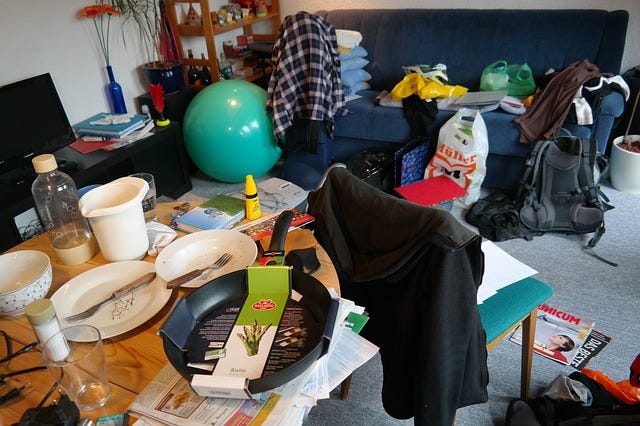
So Messed UP


pixabay

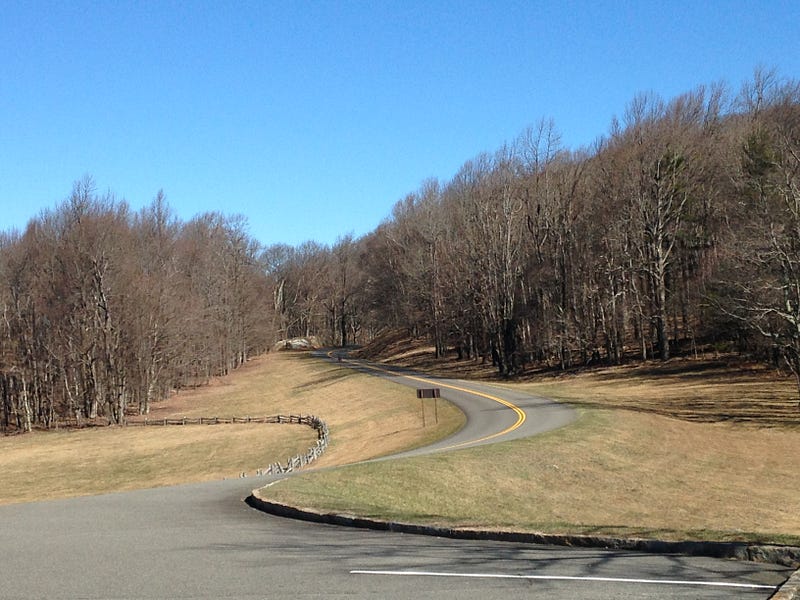
We drove up the west side of the east coast. Geographically, this is a beautiful country. I drove for three hours along the spectacular Blue Ridge Parkway. It was built by the government beginning in 1935, in part to give people jobs, and in part to give everyone a chance to enjoy the wonders of our country.
Although it is one of the most visited sites of the National Park Service it was almost totally empty as I drove through dozens of magnificent curves, surrounded by the Appalachian Mountains. Even with the hills dressed in their winter brown each new turn was a visual delight.

DJB, Blue Ridge Parkway
DJB, from Blue Ridge Parkway viewing area

But looks can be deceiving; this great country is a mess. The politics are not the cause, they are the result of a society gone wrong. We are a prosperous, strong and creative country, yet so many are so lost, angry and stressed.
I am hardly working any more. I gave up my psychotherapy practice on the day with the most sunlight of last year. At that time I was tired. I had become almost immune to the craziness and suffering that was presented to me for nine hours a day. My view of life was becoming pretty cynical and suspect. I thought that if I could stay away from listening to misery for all those hours my mind would clear and my faith in the spirits and wisdom of the world would return.
That hasn’t happened.
The first thing that disrupts my feelings of peace and hope is that I am getting older, creakier and a bit crankier. I am still young-old and except for not being able to run or jump (lost my jump-shot), I am still very active. But surrounding me, many of my friends are breaking down. Several have already disappeared. Various chronic conditions have set in: diabetes, neuropathy, M.S., heart problems and several cancers. Due to the marvelous advances in medicines most have been patched together and are continuing on. But the cloud lingers over all of us. “Is this just a head ache?”
But the main disruption comes as I realize that the people I saw for therapy were at least insightful and brave enough to confront their difficulties. From them I usually heard about other family members who were raging destructive forces that negatively impacted the lives of dozens of people, but who never would come for treatment.
Now that I am away from the office I realize that it is not just the families of my patients, the entire world is full of these people. Every family has at least one. Anxiety, depression, anger, rejection, hyper-sensitivity, seem to be woven into our society, with few effective treatments. I am finding no difference between the people I interact with now, and those I was seeing at work, except almost all of my patients were much more open and aware about what was really going on in their minds and their lives.
(Yes, all of the following details are modified enough to protect the identities.)
A Patient: She grew-up with a very abusive mother and an alcoholic father who tried to protect her until he dropped dead. Five of her seven siblings are already dead from illnesses, accidents and addictions. She went through several abusive relationships as an adult and a long period of drinking heavily herself. She recovered and stabilized in her fifties. She still suffers from the physical pains left from all of the conflicts she endured. Now she takes care of herself, has a weekend man friend, and finally feels safe and in control.
A Friend’s Daughter: Grew up in an upper middle class home. She attended a good high school in which she faltered, so she was sent to a prep school, which got her into a private college that she didn’t finish. Her older brother is a software engineer with a nice family. She came home from college and got pregnant. Now, her daughter is twelve and being raised by her grandparents, while her mother watches TV, goes to doctors, goes shopping and complains about how difficult life is.
A Patient: She was raised by a father who thought he knew God, and a mother who believed that sex was the cause of all evil. She wasn’t allowed out of the house except for school until she was sixteen. She was married for six months but couldn’t take the pressure of a relationship. She now has learned some computer skills and works in a billing office. She has a few friends she sees on weekends. She has no TV and reads English novels every evening. She’s not a fan of religion.
A Friend’s ex-wife: In her early forties as her two daughters were becoming active adolescents, she freaked out and joined a fundamentalist church. All decisions were based on God, sin and the Bible. She started giving money to TV preachers and hovering over her daughters. Her husband finally divorced her and kept her away from their daughters. She now has limited contact with them, and they are at college. They think she is having an affair with the minister.
A Patient: He came from a wealthy, well educated family who had high expectations. They lived in a wealthy town and had an active social life. He started using cocaine on weekends with his friends. He really enjoyed doing that more than anything else. He started stealing from his family to pay for it. He lied to cover it up. He then began using heroin. He went into rehab. He went back to using. He went back to rehab. He went back to using. They sent him to live with an aunt who lived far away to get a new start. I don’t think it helped, but he wasn’t my patient any longer.
A Friend’s son: Same thing, except he’s living in a small apartment in another city and his parents pay his rent and send him a small allowance. He sends a text messages about once a month to tell them he’s still alive.
Those are three examples. I could easily give you sixty. I think that the mental health of the country has gotten worse, but not by a tremendous amount. What is different is that it is more apparent, and that it has less of a functional basis. By that I mean that in so many ways our lives are easier, safer, and offer more possibilities for fun, relaxation, creativity, community, and enjoyment than ever before. Everyone, except the very poorest and oppressed ten to 15 percent, are living with better food, shelter and safety than ever. There are difficulties, but there are usually pathways to improvement. Yet, it seems as if there is an uncertainty about the future which creates a constant underlying tension of insecurity. This insecurity creates a sense of distrust that make people very suspicious and defensive, and that limits cooperation, which stops progress.
It feels as if our primitive human brains are not equipped to take advantage of many of the technological advances that could make our lives so much easier and better. Technology has disrupted so many jobs and has intruded upon so many lifestyles that people need to learn totally new coping skills to survive.
But there is almost no one to teach those skills, because none of us have been here before.
Instead we have a plethora of gurus advocating old-style solutions, usually based on the usual aphorisms, cliches, and homilies. These are mostly derived from the old institutions of religion, pop-psychology or business schools: Faith, Mindfulness, Perseverance. Many are popular only due to clever marketing strategies.
Yes, there is certainly some wisdom in the advice they offer, but they no longer really address the problems we all have to deal with.. The world has changed. It operates very differently now. The tasks that people need to survive are very different. This is true because the way people work has changed. It’s mostly connected to technology. It’s much faster. It’s much more mental and less physical. Many jobs are not even necessary, as they can be done more efficiently by computers or robots. Because economics are different, relationships are different. Men and women now play different roles. People from other countries play different roles. Many people find this confusing and stressful.
For many of us, the goals we have in our minds as we wake up each day are less clear. It becomes easy to just chase after money, but that soon proves to be an endless grind that eats away our values, ethics and trust. So what’s next? People seem lost. It becomes an existential question about how to make life meaningful. If survival is easy, how can we feel accomplished? How can we feel grown-up? This seems especially confusing to men as it becomes difficult to prove masculinity when the tasks of life are so cerebral and require interpersonal and emotional skills. Perhaps that contributes to the difficulties many women have in finding a rewarding relationship with a man, as guys seem so 20th Century, and so immature.
The short term coping solution in this country, sadly has been what usually happens during times of transition. The major power structure plays upon the fears of the majorities, splits them into smaller groups and turns them against each other. As newer, lower skill jobs become scarce, the affected groups fight each other for the scraps instead of planning for a better, cooperative future. Hostility between people increases, stress increases. As things become more complex and more difficult more people become overwhelmed and just drop out all together, ending up hiding in bed, living in someone’s basement, or trolling on the Internet.
All of these struggles are sadly ironic. The hope was that new technologies would bring positive changes for everyone. Our survival could be guaranteed. There is already the means to feed and shelter all of us. If properly employed, technology could release us from meaningless work and grant us time for more leisure and richer, more satisfying lives. But the thought of that, and the lack of structure that comes with it, seems to frighten the majority of people. Can our brains, bodies and societies cope with so much freedom? Reaching those goals demands new skills, such as cooperation and sharing. It demands communicating and compromising; listening and understanding; inclusion and acceptance.
Those are much more complex skills than individualism, competition, and a quest for money, power and dominance. The most difficult part is that any lasting, positive change requires a basic level of trust. Humans have not shown a strong ability to do that, even within their own tribes or families. I’ve seen too many families in which a man has gotten way too involved with his brother’s wife. That usually upsets the family dynamics and trust.
But adaptation to a new way of living is possible. Our early ancestors lived in tribes and had lives based on sharing and cooperation. So we have those old pathways somewhere in our brains. I’ve read that agriculture and the idea of the ownership of land put an end to that.
We can’t go back to hunting and gathering any more than we can go back to all of us growing our own food. But we do have the capability to change, learn and adjust to new situations. The ones who are able to learn the fastest will be the ones who survive and have more children to whom they can teach those skills.
We are in a time a rapid transition. The old ways don’t work, but people are clinging to them desperately, even when it means denying obvious truths. Changes causes uncertainty. Uncertainty causes fear. Fear quickly raises the level of distrust.
Transitions are never easy or smooth. Just ask your five year-old to turn off the iPad, watch how happily she makes the change.

(references for many of the ideas mentioned are available upon request. )

Tuesday, January 17, 2017

Therapy for Trump!?


David Grace responded to one of my posts about Therapy Bots with this question:
I had no idea the tech was so advanced. But here’s the Big Question, the Acid Test — Can the latest and greatest Freud-O-Bot successfully treat Donald Trump’s problems? Can it do that? Can it? If not, then we still have a long way to go.
My first reaction was to think about how difficult it would be just to get Trump to consider discussing anything with a therapist of any kind. Part of the reason I feel that Trump is so frightening is that he thinks he knows the answer before he knows the question. Almost all of his responses are attacks. He takes no blame or responsibility for anything. In his mind, he has never done anything wrong. Also, he never seems to “think slowly.” He just reacts, defensively, emotionally and aggressively.
But then I realized that as President he will be constantly criticized, and he will realize that he does not have the love and admiration that he so desires. He won with a minority, and he is quickly losing many of them, He will lose more as his lack of knowledge, experience, bad judgement and temperament become more obvious. He is finding that his “attack Tweets” only bring him more ridicule. This will bother him. At that point he may be open to some professional help.
As a Psychologist, I cannot ethically diagnose anyone whom I have not personally evaluated, and I have never met with Mr. Trump. If I did, I could not, and would not, discuss my findings in public. So this comes with a clear disclaimer :all I have to go on is how he acts on TV, in his rallies, what I have read, and his Tweets. The following is all just speculation:
Mr. Trump shows tendencies of having a narcissistic personality disorder. He also exhibits symptoms of ADHD. Several of my colleagues think he suffers with a bipolar disorder. He also seems prone to paranoid thinking and is easily drawn into conspiracy theories. Of course, when you are obnoxious, aggressive, and sue hundreds of people, it is likely that many people will turn against you.
I have treated several people with similar personalities and temperaments. Some of them were also very successful in business, as they also had a lot of energy, a desire to win at all costs, and were unconcerned about the damage they do to others. These people were some of the most difficult people to treat, especially when, like Mr. Trump, they were surrounded with many sycophantic lackeys.
Part of the difficulty is that people like this, when asked to explain their feelings, motivations, reasoning or actions, respond as if they are being attacked. They get hurt, which quickly turns to anger. Even the slightest whiff of criticism provokes a powerful defensive response. They quickly manufacture lies in their own defense, which they just as quickly believe. Yet, their need to be appreciated and admired is so strong that they never go away. They keep coming back, trying to convince their therapist of their perfection. The thought that they are not only unloved, but disrespected by someone who knows them well, is very disturbing to them..
However, these people can treated be successfully. Their therapist has to be able to hang in there long enough to prove to the patient that he/she will not abandon them, even when they show that they are vulnerable and insecure. That is a very difficult task, for both the therapist and the patient. I suspect it would be for Mr. Trump’s therapist, especially since some of his delusions of grandeur have been confirmed.
That is why, after some reflection, and in response to David Grace’s question, I think that a therapy-bot would have a much better chance of success than any live, actual person, no matter how skilled a clinician the live person may be.
When Lee Sedol, the world champion GO player, lost 4 out of 5 matches to the Google A.I. machine Alpha Go, he explained that he wins most of his matches like a poker player. He figures out the psyche of his opponent and he wears him down, or he intimidates them. Once they feel they are falling behind they can never recover. He could not do that against the A.I. bot. The bot didn’t get tired. It didn’t get flustered. It just kept improving it’s algorithm.
Any live therapist would have an emotional reaction to Trump; probably a mixture of astonishment, frustration and disgust. It’s unavoidable. A bot is immune to that. IF, and this is a big IF, Trump would stay in treatment with a bot for a year, it would be fascinating to see the results. The machine would be able to consistently point out his inconsistencies, his fantasies, his lack of reality testing, his bad judgement, his insincerity, and his insecurity. The bot would be connected to a Watson type computer and could immediately refute his lies and distortions, using real facts, without any partisan influences. It could read all of Plato, Jesus, Maimonides and others in under ten seconds, and point out unethical and immoral behavior. It could explain “conflict of interest” at a third grade level, so Mr. Trump could understand.
The machine doesn’t have any need to liked. The machine can’t be bullied. The machine won’t get furious and walk away. It would just keep learning more and more about how Trump operates, and it would do a better job of zeroing in on his flaws; questioning and sympathizing, as only a bot can.
I think there could be a good chance he would remain in therapy with the bot if it were shaped like a young woman with long legs, long hair, large seductive eyes and big breasts. He would continually try to win her (its) approval, and admiration. He would have to learn to live with the limitations — no sex with your therapist, even with a bot.
Given the skill level of Artificial Intelligence programmers today, I think such a bot could be created in a few months down at our local state.technical school (MIT). As soon as I hear from Kellyanne that she can get Trump to participate I’ll call Joichi Ito at the Media Lab and get the project started. I wonder if this kind of service will be covered by the new Republican, Unaffordable Care Act.
I think it’s worth a try. I hope Kellyanne is reading this.
N.B.: This is mostly (not completely) written in jest. However, having Donald Trump take over the office of President of the United States is not a joke. Even if you drank the Koll-aide and think he was a marvelous choice, it is becoming more apparent that he does not have the knowledge, temperament or experience for the job. He is impulsive, secretive, and seems to lack any consistent moral or ethical standards. Two of his appointees have already recused themselves due to plagiarism and corruption. We are facing a very dangerous situation. Pay Attention!

Saturday, January 07, 2017

Dancing with Emma

Dancing with Emma

(not Emma, just a free download)
Six year-old Emma (not her real name) came bounding home from kindergarten. She greeted me with a big hug and then, holding my hands, she climbed up my legs, planted her feet into my chest and did a back-flip to the floor. Next, she grabbed my hand, pulled me to the computer and clicked on a page of a children’s book to show me how well she can read. She typed out “I love you. Come and play with me tom…” she began to ask me how to spell “tomorrow” but the word popped up on the screen, so she just had to push a button to complete the sentence. “Print ” she said, and a copy of her invitation slid out of the printer.
Next, she opened a program that showed the two of us on the screen as it took a video. She tapped the keyboard and mirror images of us dancing appeared. She tapped it again and tiny red hearts fluttered between the two of us. Another tap produced blue birds flying in circles around her head. With a push of two more keys we are watching the video she had just made and she asked me what song to play in the background. “It’s the end of the world as we know it, and I feel fine” came instantly to my mind.
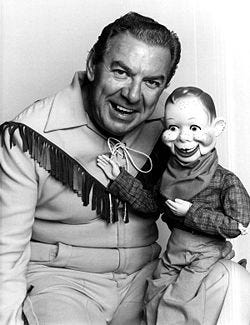
Emma is my granddaughter. She is growing up in a world that constantly offers her new possibilities. She is delighted and excited, unaware that at her age it was amazing for me to see Howdy Doody through a friend’s window, after climbing up a four floor fire escape. She has TV, Apple TV, On Demand, an iPad, with many learning apps, games and videos, and an Echo She rides in a car that changes lanes and parks itself. She also has books, blocks, paints, markers and crayons.
Emma is fortunate to have loving parents who have a good relationship, good jobs, and a supportive extended family (not just me). She is living the upper-middle class American life, with too much stuff, and too many choices. Still, she seems to handle it well. She has been learning the old skills, such as reading, coloring and pumping a swing, and also the new ones that I struggle with, mostly with technology. Of course, when she gets hungry, cranky and tired, nothing works to her satisfaction.
My granddaughter was born three years after the first iPhone was sold. YouTube was already showing 14 billion videos a month. Since her birthday the CSRP-R gene editing technique has been developed, which will eventually eliminate many birth defects, and perhaps help her design her own child. Nanotechnologies are being developed which will deliver medicines directly into cells. There have been improvements in battery technology, solar collectors, and more wind farms have been built which will offer new sources of energy. The Internet of Things has connected our houses with our shopping, our calendars, our friends, or banks, and music. Both Google and Amazon have learned more about us than we know about ourselves. Several of Emma’s friends were conceived in a petri dish and have two parents of the same sex.
But also, the polar ice caps continue to melt at an increasing rate. Refugees are fleeing war, poverty and drought and overwhelming the more developed countries. Reacting to that, many of those countries are retreating behind nationalistic, xenophobic governments. There is a terrorist attack somewhere almost every week that receives a great deal of attention, and keeps everyone fearful. The threat of cybercrime, hackers and international cyber-warfare seems to increase every day, especially as the new U.S. President seems to enjoy being provocative.
What guidance can I give to Emma besides just “be a kid and have fun?” which I think is still the most important advice a GrandPops can offer. There are so many things she probably won’t have to learn that were so necessary for my survival. She won’t have to learn to write, as she can already type, or even dictate, to a machine and it will write it for her, in any font, color or style she chooses. She adds emojis to clarify the emotion. Or, she can just make a video and skip verbal communication altogether.
I had to learn arithmetic. Then came calculators. Now Emma just asks Siri or Alexa or Google to give her the square root of 2345 (48.3252, I just asked). She can jst ask for any information: who the President was before Lincoln? or how far it is to the moon? What is a quark? These things would have taken me hours, or even days to find — if I knew where to look.
By the time she is old enough to get a driver’s license she probably won’t need to drive. She can ask her electronic assistant, (R2-D2?) to order a self-driving Uber. By then the “assistant” will know her schedule and have it waiting for her.
Will she go to college? What will college be like by then? Will most of it be on-line and channeled right into everyone’s homes? Will her classmates be from all around the world, and they will meet in small groups by putting on a Virtual Reality headsets? Will the “class” be taught by her electronic assistant? Will people still go to an actual college campus for two years just to leave home, network, have parties and consensual sex?
What will she do after college? Half of the adult women she knows are doctors, work for Google, or a bio-tech company. The other half stay home with their kids, wear Lulu Lemon all day, drink wine and make organic snacks. Will she seek a job growing genetically modified crops to feed the world, or make an augmented reality app which inspires children to grow up and take care of their grandparents? Perhaps, by the time she is fifty, everyone will be working only six hours a week and receive a guaranteed annual income. The rest of the work will be done by robots, and most of the decisions will be directed by algorithms and artificial intelligence. I think about this as Emma and I dance to the rhythm of a beatbox app that thumps out a strong base line.
All of this could happen within the next five to fifty years. It’s difficult to tell how fast it will come. Some of it will work and some won’t. It’s exciting. It’s frightening. What is clear is that the transition won’t be smooth. People resist changes, even when they would be beneficial.
Will this be a world that offers freedom and prosperity to all? A world in which everyone will have the security, education and skills to be creative, caring, and healthy? Will most people find ways to live the lives they choose; lives that are fun and fulfilling? It could be a world in which people will feel connected and enjoy being together. We are social animals. We feel better in supportive relationships.
I have too many doubts. I have worked closely with all kinds of people for my entire career. I have seen how some people quickly take advantage of other people’s weaknesses. Emma has already told me that some of the girls in her kindergarten class are mean to other girls. Some girls always push to be first. Others boast about having new things that other kids don’t have. She has also told me that she was frightened when one boy pushed someone down. Another boy got so angry that he threw a block across the room.
I know too well that humans have limitations. We are still a primitive species. Almost all of us are basically good and kind, but we can change quickly if we feel threatened. We have evolved to be very sensitive to all possible threats. That’s how we have survived. We have to recognize immediately if whatever is rustling in the bushes thinks we are a friend or food. One wrong reaction could mean we won’t get another chance. Humans are irrational. We count on our emotions to guide us.
It makes me wonder if all of this new technology and easy access to all kinds of information will be shared equally, or if it will be proprietary, and sold to those who can pay for it. There is the hope that these algorithms can help people make better decisions about what to eat, how to spend money, how to resolve conflicts, and will help everyone enjoy the benefits of scientific advances. There is the fear the the same technology can be used to manipulate people, influence their thoughts and divide everyone into classes of exploiters and exploited. This seems to be what humans have done for centuries.
How do I explain my concerns to a six year-old as we dance to Ariana Grande, and she askes why I don’t let her watch the video? I have done a pretty good job of passing my values down to both of my children, and they, and their spouces, are all good parents of their children. I want my grandchildren to be caring, curious and creative. I want them to be open to new ideas and new people. I want them to be able to experience the satisfaction of working to make the world a better place for everyone. And yet they have be aware that there are people who would take advantage of them, and others who could harm them. They have to learn whom to trust and whom to drive away.
Emma will have so many more choices than were available to me. Choices of how to live, where to live, who to be with, how to communicate, places to travel, where to work and how to work. Hopefully, medicine will be better; many more diseases will be treatable or eliminated. I’ve read that Emma’s life expectancy is 103.
Despite all of the new technologies, new discoveries, and new realities, there is one skill that we need to teach all of our children, a skill that we can’t allow machines to do for us, and that is critical thinking. This ability is what will determine who survives and thrives. More than even our children have to learn how to determine what is real from what is distorted. They have learn how to get as close to the truth as possible, especially when it shows that something they believe is wrong. They have to be able to evaluate which, of all these new technology offerings, is really useful for them, and which are manipulative or just distractions. We all have to realize that we are emotional and what really separates us from all of the new technology is that we care.
How do I teach Emma to be open and curious, yet questioning and skeptical? I want her to feel that the world is fascinating, friendly and fun, and yet to realize there are real dangers. She shouldn’t be frightened, but she needs to be aware. I want her to have the confidence in her own skills and her own judgement, so that she knows how to take care of herself.
So we start with the basics. She should learn to trust me, her parents and others who really care for her. She should understand why we tell her not to eat too much candy or jump off of tree limbs. She should know why the moon and sun appear to be the same size, but they’re not. Learn how to meet new people and assess what’s going on, like when she asked, “What’s it called when you say something that’s not true, but you think it’s funny? Oh yeah, sarcasm.” She needs to learn what it means to have a friend and to be a friend.
As she demonstrates good judgement we can let have more freedom. She can learn that making mistakes is important, because that is part of the way we learn.
As she develops her own skills of critical thinking and cause and effect, she can see that life can be fun, fascinating and satisfying. She can make her way through the world and decide where she wants to go, what she wants to do and with whom. Good values, good judgement and behavior are what constitute a worthwhile human being. The more Emmas there are, the better the world will be.
Hopefully, she will remember how much her GandPops cares for her, and she will keep in touch with him. She can show him what’s cool, and we can dance.

Wednesday, December 07, 2016

Repeat: Redux


Lou Reed’s “Dirty Boulevard” popped up on Pandora. I hadn’t heard it for a while so I pushed the “repeat” button. It brought back a rush of memories, strangely memories about my mother.  She didn’t like Lou Reed, she was a Ray Charles fan. But it wasn’t the song that reminded me of her, it was the repeat button. My mother was almost ninety when she died. During the last few years of her life she told me often that she was tried of seeing the world repeat itself.  She would say, “I was born when there was a war in Bosnia, and I will die during a war in Bosnia.”  She outlived that conflict by a year.

As I enter my later years I am beginning to feel as if I have gone through this kind of wash and rinse cycle too many times before.  However, this time seems more disappointing because we are part of a time of exciting changes.  New technologies have brought enticing and exciting changes to the way we live.  We are now have access to anything we want to know any time we want to it.  If you don’t think that is an amazing benefit to us old folks just ask us the capitol of South Carolina, or who played Carla in Cheers; you know, the curly one, you know….

Technology has opened the gates to new discoveries in science that were unimaginable twenty years ago.  What we are seeing is how complex we are, as is the world we live in.  There are no simple answers to anything, a lot of what we thought was accurate is only partially so.  There are many debates about which parts are true, which will be resolved through more research, but until then we are kept wondering and looking. It’s a fascinating time, unless you are bothered by unfinished details and ambiguous results.

Yet, many of the innovations which are being applied to solve so many problems are also being used to tear us apart and create deep divisions.  It has become very difficult to tell the difference between a half truth and a total lie. Information comes rushing at us so fast that it is difficult to sort out what’s real.  One trait we humans have is to see confirming evidence for what we already believe.  That makes us feel more comfortable to think that we have it right.  It also leads us to hold fast to ideas that are not true.  We get angry at those who disagree with us, or show us that we are wrong. When his half-truth contradicts my half-truth I know he’s an idiot.

For almost forty years I was a psychologist in beautiful Lowell, Massachusetts. I opened my practice just as the first of the Wang Towers was being built.  Does anyone remember the Wang 1200 WPS? it was at the beginning of our transformation into the digital age. You could type a page, and move the words or paragraphs around.  You could delete things and put them back.  Amazing!  But Wang filed for bankruptcy in 1992.  It couldn’t keep up with the development of computers by companies like Digital Equipment, and IBM..  Digital was acquired by Compaq in 1998.  Compaq was taken over by HP in 2001. By then everyone was getting connected to the Internet, and soon we all had the capability to go mobile and stay connected every minute of the day.

This history of companies rising and falling in Lowell is not new, it dates back to Lowell’s founding.  The mills were new technology in 1840, used to turn cotton into cloth.  The looms were first run by women who came from the farms of New England.  When they felt exploited by low wages they were replaced by the German immigrants, who were replaced by French Canadians.   Eventually the mills moved south for cheaper labor, and now most of our cotton clothes are made in Asia.  You’re probably aware of that.


For a while it looked like the digital revolution would be different than that industrial revolution. Instead of long hours and harsh conditions that came with the industrial revolution,  the digital age was eliminating many of the harsh repetitive jobs and offering thousands of new ways to make our lives easier.  At work, at home, and at play, little bitty chips will do more and more of the repetitive, mundane tasks of our lives, such as shopping, banking, cleaning, turning out the lights, playing music, setting appointments, meeting new partners, even driving, drawing and drooling. Surely all of this will help us improve our lives, make better decisions, and understand and appreciate each other better. 

Well, yes and no.  

Remember that exactly one hundred years ago the new engines and mechanical marvels of that industrial transition helped bring about the biggest, most meaningless waste of human life in history: The First World War.  We don’t want to go through that again.We don’t want to be blaming innocent scapegoats for all of the disruptive changes. We don’t want modern day Luddites attacking the machines, or being afraid of new knowledge. We know that once new genies are out of the bottle there is no way to put them back.

As those thoughts raced through my mind I heard the words from Lou’s 1989 song and they caused me to shudder.
“Give me your hungry, your tired your poor I'll piss on 'em
that's what the Statue of Bigotry says”

As a psychologist I have seen every day that people don’t make changes easily. When things are changing all around us it leads to uncertainty.  Uncertainty causes anxiety.  Anxiety creates resistance.  There is always a backlash. It seems as if it is in our genes.  Whenever human beings are threatened they lash out.  I have seen so many patients who have turned their lives around, but then, when hit with an unexpected stress, such as a lost job, a break-up, an illness in the family, they revert to their old, dysfunctional ways. They get angry, they go back to drinking, they don’t show up for work.  They mess up their lives all over again. That seems to be what the whole world is going through now.

But the backlash doesn’t have to destroy everything.  In fact it can’t.  The world will keep rolling on creating new and better.  We will have better medicine because of Watson making diagnoses.  We will have self-guided electric cars that will reduce accidents, eliminate traffic and reduce pollution.  We will have algorithms that keep us healthy, help us make smarter decisions, and foster better, clearer communication. We will keep blending the white, black, tan and brown skin tones until it is difficult to tell the difference. Maybe we will invent even more genders.

But right now, we have to deal with the backlash.  We have to find ways to spread the benefits to everyone.  We have to help everyone choose the changes that they find useful, and not just be sold crap they don’t need or want.   We need to find ways to expose manipulation, fear and false prophets.  Under stress it is easy to get people to trade freedom for security.  People will hold on to what they know, even when it doesn’t work any more.  That’s why so many cultures aren’t here any more. I want my children and grandchildren to live a world that can deal with reality.  I want them to have a world that values all people equally.  I want them to live in peace — a wish that has been repeated in vain for five thousand years.


Transitions are never easy. To paraphrase George Santayana, it helps to learn from the past so as not to repeat it.  Or to quote Mark Twain: ““History doesn't repeat itself, but it does rhyme.”


Let’s not go back to The Dirty Boulevard, except to listen to the guitar riffs.

Wednesday, November 30, 2016

Fear Pushes Back:

“We have Nothing to Fear, but Fear Itself “— FDR

For the price of a cup of coffee I have garnered a table on the ground floor of the Koch Institute for Cancer Research at MIT. I spent part of the morning listening to papers being delivered at Neurotech 2016 which describe the new and fascinating ways that many neuro-labs are probing into brains to help solve neurological mysteries. There are now technologies that have allowed people to seek answers to questions we didn’t even know to ask ten years ago.
There is irony of course, sitting here at this Koch Institute, which is funded by the same family that also funds some of the most conservative political issues in our country. They did not fund Trump, but their money did help spread exaggerated fear about what is happening in America. It is this fear that is pushing back against the adoption of many of the new technological and scientific advances that are being developed right here on this campus, and at other places all around the country and the world. It is the fear of change.
Trump, the Republican right, the Alt-right, the rightwing reactionary parties that are growing all over the world, and even ISIS, have aimed their messages at that fear. They are appealing to people to hold on to the traditional ways that have worked for centuries. In most cases these are the extreme form of the traditional ways. In many cases the arguments are based upon the unprovable and unfounded beliefs that were the guiding principles of the world before the scientific method of thought began to take hold. In other cases the arguments are put forth by those who have run the traditional power structure, as they struggle to stay in power. They have been feeling that their influence is being eroded by forces that they don’t quite understand and they can’t control. Their response is to clamp down more controls. They justify doing this by raising fears about the usual scapegoats; people who are different, ideas that are different, and any redistribution of power.
There is enough truth in this fear of change to attract almost half the world into being willing to give up much of their freedoms to feel safe. I know, from being a therapist for so many years, how difficult and frightening change can be. Even when the change is obviously for the better, most people resist.
I have spent decades working with people who struggle to stop eating at McDonald’s, stop hitting their kids, stop spending more money than they have. They understand that they need to study to pass a test and exercise to stay healthy. It would help if they could tell people what they want instead of being angry all the time. They haven’t learned that if you promised someone you would do something, do it.
When I talk about these things in therapy people agree that those are the things they want to do. They are almost all capable of change, but it takes months and years for it to happen. The biggest obstacle is fear. Feeling bad has become familiar. How does anyone know what the change will fee like?
If we move away from the being lead by old, White men, who will replace them? Will it be better? For whom? What’s the guarantee?
If I have been told all my life that there is one true god, and these people have a different god, or no god at all, how can I trust them? They are blasphemers. They are infidels.
Many wmen realize that they are as smart, capable and creative as any man. They see that they can prove themselves in the world, and be proud of their accomplishments. But many of them wonder if that freedom is worth giving up their male protectors and the financial support that often goes with it. They feel safer being supportive and nurturing. Why take on challenges when dependency is easier?
All these changes are frightening. I feel much safer if I carry a gun. Everyone on TV carries a gun and shoots the bad-guys. I want to be a hero, protect my family, and shoot bad guys too. Good guy Americans have always shot bad guys (and Indians, [and Black people, but we never talk about that]).
Changes are coming from all over. Almost all jobs have changed, or have been lost. Marriage is between anyone. People from so many countries are moving to other countries. Some are running away from being killed by militias or bombs from their own government. Some come here to start a business and make money. Some come here to pick fruit or cut your lawn. How can I tell which ones are terrorists?
There are so many new ways to communicated and get information. How do I know whom to believe? Facebook? The New York Times? Fox News, My friend Leslie? My doctor? The ads on TV? A priest? A neurobiologist?
When the changes get scary people want to hide. They want a big strong Daddy to protect them and make the decisions. They want a father, who knows best, just like in 1959, when nice White families lived in small towns with quirky neighbors and the same newspapers were delivered to everyone’s door. But we now know that comforting Cliff Huxtable turned out to be Bill Cosby, the rapist. We already know that our new leader-to-be is an overly sensitive narcissist, who retaliates against any criticism. But many are willing to give up some freedoms to feel safe, even when the danger is really slight.
As i sit here in this coffee shop, and go across the street to the conference, I see who it is who is making all of these changes. It is people from all over the world working together, sharing knowledge, trying to correct mistakes, trying to solve the mysteries of life. They are men and women who are all different colors, sizes, styles and backgrounds. Most of them are doing it because it is fascinating, helpful and exciting. Money is hardly a consideration. They want knowledge. They want to make the world better. They are amazed that given what we know today, so many people can still get so angry at each other over such irrelevant things.
What are these diverse groups of people doing? Here in this building they are developing new ways to fight cancer. Some of the treatments are already in use. They were not available five years ago. In the building a cross the street, where the conference is being held, a woman named Canan Dagneviren is describing how she is building “a mechanically-adaptive, mirco-fabricated device for chronic treatment of neurological disorders.”
Dr. Dagneviren was born and educated in Turkey, and then she came to do her graduate work in the U.S. She may or may not be a Muslim. I am sure that many people in the U.S. would yell at her to go back to where she came from. I am sure that the in-flow of people like her, who would love to come here to study, explore and create, will be diminished because of the unwelcoming atmosphere that has been created by this election.
The funding for this research comes from a combination of foundation money and a lot of government grants. But the flow of the government money has been cut by a conservative Congress. It will be worse under Trump, a man who doesn’t understand science, doesn’t want change and seems frightened of innovation.
But even he, with all of his Presidential powers can’t stop the changes from coming. They are pouring in over the fibre-optic network. They are moving in next door. They are the electric, self-driving cars that will be on the highway. They are keeping us healthy. They are warming our planet. They are taking away our jobs. They are making some new people very rich.
These new technologies could be saving the lives of many more people. They could be feeding many hungry people all around the world. They could be controlling greenhouse gases. They could be helping us all live longer, healthier, more prosperous and creative lives. But obstacles get thrown in their path because people are afraid of change. Unfortunately, the backlash seems to always be a part of the process. Change, even when it is clearly beneficial, never comes easily. Adaptation and evolution can take a long time, and many species don’t survive.

Monday, November 21, 2016

Fighting the Tides of Technology


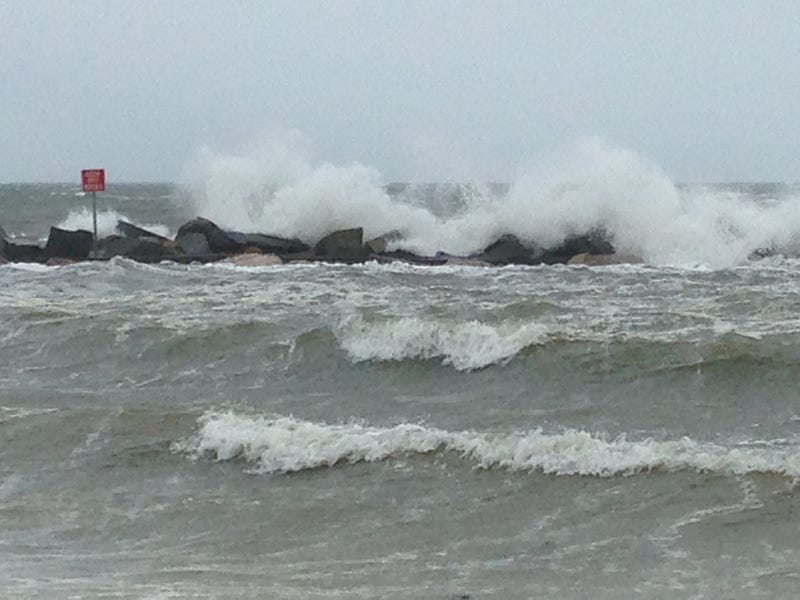
The seasons are changing. It gets dark early up here on the New England coast. I walked down to the beach and there was a stiff wind blowing across the dunes, chopping up the water. I had not checked the tide clock before I left the house so I couldn’t tell if the tide was going out or coming in. It goes out a few hundred yards on this beach, so the difference is dramatic. I could have reached into my pocket and looked at the tide app on my phone but I decided to use my primitive human senses and watch the water. As I stood near the water I could tell after the third wave came rushing towards me that the tide was coming in quickly.
I can’t stop the tides, no one can. People can build a dike, a dam or levy, and hold the water back, direct it or control it. Those measures can work for a while.. The tides are constant and will keep coming, long past my lifetime. They may keep rolling in for a few billion years until the sun explodes. But unlike the tides our human societies are now in constant change, mostly due to new technologies, and despite the current chaos, and the efforts to hold on to old ways, no one can stop those changes from coming either. As Kevin Kelly said, it’s Inevitable.
There is a battle going on to direct the tide of new technologies that are engulfing us and the winner has not yet been determined. It is a confusing struggle as it is difficult to tell who is on which side. Sometimes the innovators and developers are really on both sides at once. On one end there are the applications of technology that can bring progress toward the goal of making people’s lives healthier, happier, more prosperous and creative. At the other end there seem to be many new developments which are being used to manipulate and/ or exploit people. The determination of what will be considered beneficial has become more a question of philosophy than technology or computer science.
The New York Times, a source that I consider reliable, ran an article on November 20, 2016, about a company called Cambridge Analytics, which was based in Cambridge, UK, and funded by Robert Mercer, a hedge fund billionaire who supports many conservative causes and candidates. This company was hired by the Trump campaign.
What the company does, and I would guess that there are similar companies which work on the liberal end of the spectrum, so this isn’t a political rant, gathered data on people’s personality traits, mostly through on-line sites such as Facebook. They offered people the chance to take a personality test, a test designed by my profession (Psychology) to determine the degree to which someone possesses the personality traits of Openness, Conscientiousness,,Extraversion, Agreeableness and Neuroticism (OCEAN). The person got to see how they scored on all of these, and so did the company. Facebook also gave the company access to the names and profiles of each individual. It is easy to understand how that knowledge can be used to design specific ways to approach an individual to sell them something, even an ideology. It could help determine what kind of information this person would find persuasive and how it should be presented.
I am older than most Facebook users, in fact right now I don’t even have a Facebook account and my LinkedIn profile needs to be updated. My training as a Psychologist placed a strong emphasis on trust and confidentiality. It was strongly believed that people who came for therapy would be much more open and revealing if they were assured that nothing of what they said would ever be told to anyone. We were granted a legal basis, which was not total, but almost, for doctor-patient confidentiality. Many of my colleagues of my age are amazed at how people one or two generations younger than we are seem more than willing to put the details of their lives, and in many cases their bodies, out into cyberspace for anyone and everyone to examine and analyze. This OCEAN test from Cambridge Analytics was offered for free and probably gave no assurance that the information would remain anonymous, yet thousands of people took the opportunity to explore their personality and just give so much of their psychological profile away. If you think about it, we all have given out all of the most intimate details of our lives in order to have the conveniences offered by technology. Our credit scores, our credit card expenditures, our driving records, our arrest records, our income, what we are willing to pay for, how far we will travel for a lower price, our religion, our friends….everything is out there and accessible. Your health record may be protected by HIPPA laws, but your pharmacy purchases and your doctor visit co-payments are easily discovered. There are hundreds of companies gathering data about all of us without our knowledge. In return they often feed us information that they think will interest us. We usually don’t know the origin or the accuracy of that information.
We get ads for things we were looking for. We get ads for things related to what we were looking for. We get news about the news pieces we read. We get news about what are friends are reading, doing or thinking about. We get medical information and medical suggestions. We get all kinds of news, about entertainment, sports, arts, politics, weather, finances, and anything else we ever showed an interest in. It flows in like the tide, constant and from many sources: on-line, in print, through individual apps, on the radio, on TV, even from actual conversations with people, much of which is the kind of gossip that has gone on for centuries.
There has always been gossip and news. There has always been propaganda and false news. The Spanish American War was probably started because of a greatly inflated threat delivered in huge headlines. The difference is in the volume, as the flow is continuous, and constantly being revised and updated, or else one “most important event” is quickly superseded by another.
Another major difference comes from these analytics. We are each targeted individually, in ways that have been designed to connect with our fears and desires. You looked at that shirt but didn’t buy it for $39. If you buy it within the next hour it will be $29, just for you. You signed this petition, now we will ask you for money for that cause. We can tell you supported the police in Ferguson, so we will flood you with pro-Trump information.
Is this evil or helpful? Why not get $10 off the price of a shirt, or maybe it will go to $20? Many people use the information from their FitBit to motivate them to exercise and stay healthy. There are mindfulness apps that help people focus and calm down. There are many apps that help people monitor and control their spending. We get information about how to be a better parent, a better investor, a better cook, even a better lover.
Today’s world demands that we develop different skills if we are to survive and prosper, as individuals and as a society. When I was in graduate school the search for information was difficult and time consuming. Much of what we could find, even in most of the sciences, was based on methods that were inexact and somewhat speculative, but it was the best we had available at the time.
Today, due to new technologies, the is a fantastic amount of new knowledge in every field of science, most of it demonstrating how complex we are as individuals and as a society. The skills we need today involve much more critical thinking and questioning than information seeking and following instructions. Few people get three year apprenticeships under the supervision of a craftsman. Increasingly we are taught by machines about how to run machines. We are given many contradictory pieces of information about the same topic. We barely have to to reflect upon how to make a decision when more information becomes available.
That’s why these issues become a question of philosophy. What do you want your life to be like? What do you want to accomplish? What are your values: Money? Family? Safety? Creativity? Harmony? Peace? Justice? Equality? Fun? What makes you feel good, better and best? Why?
I don’t know if these questions can be answered by an algorithm. I’m sure there is technology that shows you what you do with your time, energy and money, which gives a picture of what your priorities really are. But it is up to each of us to determine if that is really what we want to be. Then we have to weed through all of the information that comes flooding in, so that we can design our own path and choose our own future.
It is often a very difficult task. The tide keeps coming in, and there a hidden rip-tides that can pull us under.