Showing posts with label mental health. Show all posts

Thursday, March 09, 2017

So Messed UP


pixabay

We drove up the west side of the east coast. Geographically, this is a beautiful country. I drove for three hours along the spectacular Blue Ridge Parkway. It was built by the government beginning in 1935, in part to give people jobs, and in part to give everyone a chance to enjoy the wonders of our country.
Although it is one of the most visited sites of the National Park Service it was almost totally empty as I drove through dozens of magnificent curves, surrounded by the Appalachian Mountains. Even with the hills dressed in their winter brown each new turn was a visual delight.
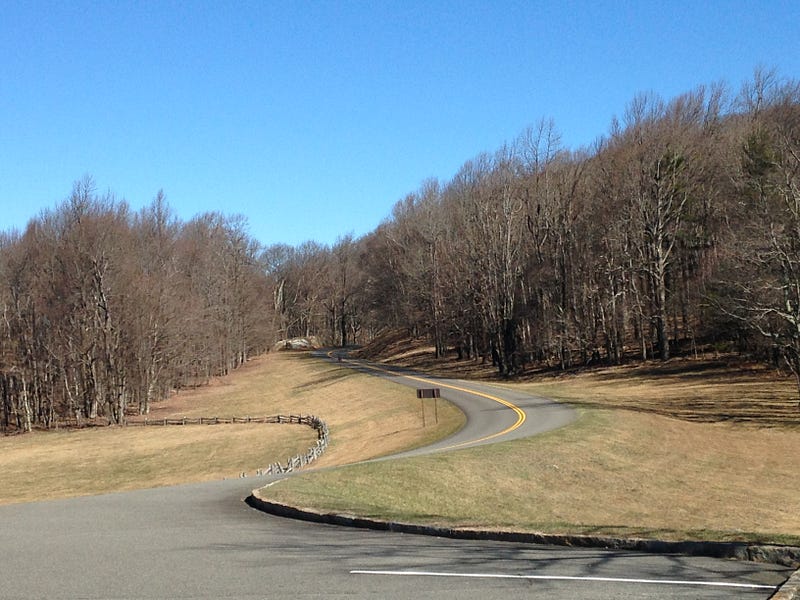

DJB, Blue Ridge Parkway
DJB, from Blue Ridge Parkway viewing area

But looks can be deceiving; this great country is a mess. The politics are not the cause, they are the result of a society gone wrong. We are a prosperous, strong and creative country, yet so many are so lost, angry and stressed.
I am hardly working any more. I gave up my psychotherapy practice on the day with the most sunlight of last year. At that time I was tired. I had become almost immune to the craziness and suffering that was presented to me for nine hours a day. My view of life was becoming pretty cynical and suspect. I thought that if I could stay away from listening to misery for all those hours my mind would clear and my faith in the spirits and wisdom of the world would return.
That hasn’t happened.
The first thing that disrupts my feelings of peace and hope is that I am getting older, creakier and a bit crankier. I am still young-old and except for not being able to run or jump (lost my jump-shot), I am still very active. But surrounding me, many of my friends are breaking down. Several have already disappeared. Various chronic conditions have set in: diabetes, neuropathy, M.S., heart problems and several cancers. Due to the marvelous advances in medicines most have been patched together and are continuing on. But the cloud lingers over all of us. “Is this just a head ache?”
But the main disruption comes as I realize that the people I saw for therapy were at least insightful and brave enough to confront their difficulties. From them I usually heard about other family members who were raging destructive forces that negatively impacted the lives of dozens of people, but who never would come for treatment.
Now that I am away from the office I realize that it is not just the families of my patients, the entire world is full of these people. Every family has at least one. Anxiety, depression, anger, rejection, hyper-sensitivity, seem to be woven into our society, with few effective treatments. I am finding no difference between the people I interact with now, and those I was seeing at work, except almost all of my patients were much more open and aware about what was really going on in their minds and their lives.
(Yes, all of the following details are modified enough to protect the identities.)
A Patient: She grew-up with a very abusive mother and an alcoholic father who tried to protect her until he dropped dead. Five of her seven siblings are already dead from illnesses, accidents and addictions. She went through several abusive relationships as an adult and a long period of drinking heavily herself. She recovered and stabilized in her fifties. She still suffers from the physical pains left from all of the conflicts she endured. Now she takes care of herself, has a weekend man friend, and finally feels safe and in control.
A Friend’s Daughter: Grew up in an upper middle class home. She attended a good high school in which she faltered, so she was sent to a prep school, which got her into a private college that she didn’t finish. Her older brother is a software engineer with a nice family. She came home from college and got pregnant. Now, her daughter is twelve and being raised by her grandparents, while her mother watches TV, goes to doctors, goes shopping and complains about how difficult life is.
A Patient: She was raised by a father who thought he knew God, and a mother who believed that sex was the cause of all evil. She wasn’t allowed out of the house except for school until she was sixteen. She was married for six months but couldn’t take the pressure of a relationship. She now has learned some computer skills and works in a billing office. She has a few friends she sees on weekends. She has no TV and reads English novels every evening. She’s not a fan of religion.
A Friend’s ex-wife: In her early forties as her two daughters were becoming active adolescents, she freaked out and joined a fundamentalist church. All decisions were based on God, sin and the Bible. She started giving money to TV preachers and hovering over her daughters. Her husband finally divorced her and kept her away from their daughters. She now has limited contact with them, and they are at college. They think she is having an affair with the minister.
A Patient: He came from a wealthy, well educated family who had high expectations. They lived in a wealthy town and had an active social life. He started using cocaine on weekends with his friends. He really enjoyed doing that more than anything else. He started stealing from his family to pay for it. He lied to cover it up. He then began using heroin. He went into rehab. He went back to using. He went back to rehab. He went back to using. They sent him to live with an aunt who lived far away to get a new start. I don’t think it helped, but he wasn’t my patient any longer.
A Friend’s son: Same thing, except he’s living in a small apartment in another city and his parents pay his rent and send him a small allowance. He sends a text messages about once a month to tell them he’s still alive.
Those are three examples. I could easily give you sixty. I think that the mental health of the country has gotten worse, but not by a tremendous amount. What is different is that it is more apparent, and that it has less of a functional basis. By that I mean that in so many ways our lives are easier, safer, and offer more possibilities for fun, relaxation, creativity, community, and enjoyment than ever before. Everyone, except the very poorest and oppressed ten to 15 percent, are living with better food, shelter and safety than ever. There are difficulties, but there are usually pathways to improvement. Yet, it seems as if there is an uncertainty about the future which creates a constant underlying tension of insecurity. This insecurity creates a sense of distrust that make people very suspicious and defensive, and that limits cooperation, which stops progress.
It feels as if our primitive human brains are not equipped to take advantage of many of the technological advances that could make our lives so much easier and better. Technology has disrupted so many jobs and has intruded upon so many lifestyles that people need to learn totally new coping skills to survive.
But there is almost no one to teach those skills, because none of us have been here before.
Instead we have a plethora of gurus advocating old-style solutions, usually based on the usual aphorisms, cliches, and homilies. These are mostly derived from the old institutions of religion, pop-psychology or business schools: Faith, Mindfulness, Perseverance. Many are popular only due to clever marketing strategies.
Yes, there is certainly some wisdom in the advice they offer, but they no longer really address the problems we all have to deal with.. The world has changed. It operates very differently now. The tasks that people need to survive are very different. This is true because the way people work has changed. It’s mostly connected to technology. It’s much faster. It’s much more mental and less physical. Many jobs are not even necessary, as they can be done more efficiently by computers or robots. Because economics are different, relationships are different. Men and women now play different roles. People from other countries play different roles. Many people find this confusing and stressful.
For many of us, the goals we have in our minds as we wake up each day are less clear. It becomes easy to just chase after money, but that soon proves to be an endless grind that eats away our values, ethics and trust. So what’s next? People seem lost. It becomes an existential question about how to make life meaningful. If survival is easy, how can we feel accomplished? How can we feel grown-up? This seems especially confusing to men as it becomes difficult to prove masculinity when the tasks of life are so cerebral and require interpersonal and emotional skills. Perhaps that contributes to the difficulties many women have in finding a rewarding relationship with a man, as guys seem so 20th Century, and so immature.
The short term coping solution in this country, sadly has been what usually happens during times of transition. The major power structure plays upon the fears of the majorities, splits them into smaller groups and turns them against each other. As newer, lower skill jobs become scarce, the affected groups fight each other for the scraps instead of planning for a better, cooperative future. Hostility between people increases, stress increases. As things become more complex and more difficult more people become overwhelmed and just drop out all together, ending up hiding in bed, living in someone’s basement, or trolling on the Internet.
All of these struggles are sadly ironic. The hope was that new technologies would bring positive changes for everyone. Our survival could be guaranteed. There is already the means to feed and shelter all of us. If properly employed, technology could release us from meaningless work and grant us time for more leisure and richer, more satisfying lives. But the thought of that, and the lack of structure that comes with it, seems to frighten the majority of people. Can our brains, bodies and societies cope with so much freedom? Reaching those goals demands new skills, such as cooperation and sharing. It demands communicating and compromising; listening and understanding; inclusion and acceptance.
Those are much more complex skills than individualism, competition, and a quest for money, power and dominance. The most difficult part is that any lasting, positive change requires a basic level of trust. Humans have not shown a strong ability to do that, even within their own tribes or families. I’ve seen too many families in which a man has gotten way too involved with his brother’s wife. That usually upsets the family dynamics and trust.
But adaptation to a new way of living is possible. Our early ancestors lived in tribes and had lives based on sharing and cooperation. So we have those old pathways somewhere in our brains. I’ve read that agriculture and the idea of the ownership of land put an end to that.
We can’t go back to hunting and gathering any more than we can go back to all of us growing our own food. But we do have the capability to change, learn and adjust to new situations. The ones who are able to learn the fastest will be the ones who survive and have more children to whom they can teach those skills.
We are in a time a rapid transition. The old ways don’t work, but people are clinging to them desperately, even when it means denying obvious truths. Changes causes uncertainty. Uncertainty causes fear. Fear quickly raises the level of distrust.
Transitions are never easy or smooth. Just ask your five year-old to turn off the iPad, watch how happily she makes the change.

(references for many of the ideas mentioned are available upon request. )

Saturday, November 26, 2016

I’ve Been Replaced!


Even doing a most Human Task
For that last fifteen years I‘ve been waiting for this to happen. I could see it gaining on me, but following Satchel Paige’s advice I din’t want to turn around. I began to suspect this was coming when the fees that insurance companies paid us for psychotherapy began to drop.. My colleagues thought it was due to the cheaper costs of people with Masters’ degrees, but I what knew better: chat bots and A.I.
In 1966, before there was a word for “chat-bots,” Joseph Weizenbaum at the MIT Artificial Intelligence Laboratory created Eliza, a computer program that was designed to respond to typed questions with simple responses, mostly repeating what the typer said, or saying “tell me more.” You can talk to a slightly improved Eliza on this web-site: http://www.manifestation.com/neurotoys/eliza.php3
I’ve been a psychotherapist for over forty years. I can look at people and tell when the words they are saying are covering up what they are feeling. I’ve learned how to gently push people to look deeper into themselves and open up.
There were many times when I sat with couples who were trying to sort out the difficulties in their relationship. Often one of them had been caught acting like some of our past or future Presidents, which the other partner found upsetting. The guilty party would be very apologetic and swear on their children’s heads that it would never happen again.
After years of witnessing these acts of contrition I can accurately determine whom to believe and who was still attempting to deceive. I had developed two methods which aided my intuition. The first was that I became a close observer of faces. There are very subtle differences in the coordination of the muscles between the eyes and the mouth. I’m not sure if I could tell from a picture. I think it was more about how they move, or don’t move, together.
I also had the advantage of working in a small city in which everyone knew everyone else’s business I often had either the third member of the love triangle, or her roommate, or his sister, or someone else who was bothered by what was going on, who was also seeing me for psychotherapy. They had no idea that I was seeing this couple, but it bothered them enough to bring it up in their own sessions.
However, those years of experience; that unique talent, has now been learned by a tv camera that is connected to a computer that runs a “deep learning” artificial intelligence program. I saw a demonstration of one of them two months ago at The Harvard Innovation Lab during Hub Week in Boston. The program, developed by a company called Affectiva,, would focus on a person’s face, and determine their emotional state. According to their marketing materials it has developed “norms built on the world’s largest emotional database of more than 25,000 media units and 4 million faces analyzed in 75 countries.” They also state that “we are humanizing technology.”
I my view they are taking a big step towards dehumanizing psychotherapy.
There is a lot of research that shows that we humans are social creatures. We have evolved to care about each other. Those of us who have better social relationships, especially close ones with partners, family and friends, do better in life. Those people live longer, happier, healthier lives.
One of the major healing factors of psychotherapy as been that the patient feels a connection to an understanding, caring, non-judgmental person, especially one who has some knowledge and status, like someone you call “doctor.” Would it be possible to “transfer” such feelings of trust and hope onto a machine?
Apparently, it is. In fact, there are studies that have been done with war veterans who have stated a preference to talk to a responsive A. I. program. When asked why, many of the veterans explained that when they would recount some really gruesome battle field experience, such as having to shoot an eight year-old girl in the head because she was carrying a bomb, they could feel the reaction from any human counselor, even another vet. But a machine could be empathic and still not be upset.
Also, during the years of Facebook. Twitter, Snapchat and even Medium, people have been conditioned to seek “likes.” Those little electronic bits of encouragement evoke the positive feelings of accomplishment, hope and happiness in response to any kind of feedback on social media. It keeps people coming back. It keeps people wanting more. Each little thumbs-up, heart or smile, makes us feel a bit more connected, clever and important.
During the last ten years there have been over a dozen companies that are using artificial intelligence and deep learning to not only monitor human emotion, they are building machines that can respond in an artificial empathic manner, reflecting the emotion of the real human. In addition to responding to facial features these programs can respond to the tone of voice and the content of the conversation. There is a program that goes deeper than the facial expressions and monitors the blood flow in the muscles of the face. They feel that this can reveal when someone is trying to hide there emotions. There are also new ways of tracking other physiological components of emotions, including heart rate, neurological responses, stress and arousal levels, and other physical activities.

Could this be psychotherapeutic?

The technology is probably available today for you to sit in front of a screen, and by talking to a deep learning machine, you could diminish your emotional difficulties and improve your life. The machine could watch and listen to you, monitor the content of what you say and determine the emotions that you are feeling. It could probably tell if you are angry with your mother, have suspicions about you spouse, are exaggerating your accomplishments or are lying about your drug use. It could offer soothing, compassionate responses, as well as questions that would push you to explore the origins and complications of your difficulties. It could point out your errors in judgement without insulting you, and probably help you sort through ideas and find better solutions.
What is new about this is that the more these deep learning machines “practice,” just like a good clinician, they get better. They would learn more about your emotional patterns and your responses. You could report back and tell them what you felt was successful and helpful. In addition, they could also get information about your physical conditions to see if your blood pressure was staying under control, or your cortisol levels were diminished. It could know if you sleep better after your sessions, and if you are generally happier and more productive. It wouldn’t have to depend on your verbal reports during the first fifteen minutes of the session. If necessary you could have a breathalyzer app added to the protocol.
Another big advantage is that your virtual, deep learning therapist would always be available, and the sessions could be as long or short as you felt necessary. You wouldn’t feel you were intruding on your therapist over the weekend. The therapist would never be tired, preoccupied by the troubles in his own life, or worrying about the fees. It would come with graphs and analytics that would help you monitor your own progress, and it could give you smiley faces and heart emogis whenever you did well.
Fantastic! 😀
Fantastic? 😟
Are there dangers with this? Sure are! Many.
So much depends upon the values and philosophies of the programmer. What gets reinforced? Does it just allow you to go down your own crazy path? Does it have a goal of making you a better cog in a conformist society? Those things are not yet clear.
The big question is: what about people? Will some people become much more comfortable with a compassionate machine and still find ‘live” people to anxiety provoking, too demanding and too annoying?
Life can be tough. Each of us “live” people have our own agenda. We want something from you, just as you want from us. That’s what relationships are. That’s why they work. That’s why they don’t work. If the machine annoys you you can unplug it. That’s not good to do to a partner.
Remember, technology is a tool. Many new innovations are offered to us every day to help us live better, easier, happier, healthier, more efficient, creative, productive and satisfying lives.
But what all those words really mean is up to each of us, individually and as a society.
Choose wisely my friends.

Thursday, October 20, 2016

Tools that Think for Us

Section - A  — Big Data and Algorithms

In March of 2016 a computer named Alpha Go, took another big step towards showing that our new tools are capable of solving more complex problems. It beat the world’s best GO player at that ancient game which has almost an infinite number of moves. This was more difficult than just combing through tons of data like Deep Blue did when it beat the worlds’ best chess player, Gary Kasparov, in 1997, or when Watson beat Brad Rutter and Ken Jennings at Jeopardy in 2011. In this contest, Alpha Go beat Lee Se Dol four matches to one.  It showed that a software program developed at Google could learn from experience and improve its own performance.  
The program was designed to improve itself based upon it’s successes and failures, even in very complex circumstances. That’s what smart humans do, but the machine’s approach was very different.  Another major difference between the machine and human competitors, is that the machine was unaffected by fatigue or psychological pressure.  Lee Se Dol emphasized that difference in his post-match interview. "It is different, there's no doubt. First of all, its not human. It took time for me to get used to its playing style," Lee said."It's not shaken up psychologically and stays focused right until the end," he said.  
It seems that one of the reasons that Lee is such a great champion is his ability to read his opponent and to push a person to his limits. People react when they feel they have made a mistake or if they think they are beginning to lose (see: Trump).  That was not true with Alpha Go.  Observers felt the machine made a strategic error early in the last match, but that didn’t upset it  — it was unaware of it really, since it is not really “aware” of anything, and it never gets “upset.”  As play continued it was able to make the necessary corrections.  
Besides the obvious advantage of computing power, it is this  lack of emotion that is the major difference between people and our machines and tools.  Machines have no prejudices or biases; they just look at the data.  And the data is another big difference.  The start of the new millennium was the time that the term “Big Data began to gain a lot of traction.  People in many fields were realizing that the amount of information that was being produced, and the amount of different factors that computers could collect and analyze, was way beyond what any human mind could keep up with, or make sense out of.  
“Big Data” is now the term for how machines do that job for us.  Big Data is the answer to the problems of being overwhelmed by the five “Vs” of information: Volume, Variety, Velocity, Variability and Veracity.  What many people don’t realize is how pervasive the use of Big Data has already become in our lives, and it will play a much greater role in the future.   It is what every retailer uses to follow what we have looked at, what we bought and then determine what they can sell us next.  It is what every political party uses to see who we may vote for, and how they can try to change our mind.  It is how sports teams decide what players deserve a lot of money.  It is what your insurance company uses to decide how much risk there is in your life. It is what doctors are using to help with diagnoses and treatment.
For several years now I have been trying to persuade my colleagues who do psychotherapy to take advantage of the capabilities of Big Data to improve their diagnostic skills and clinical interventions.  The overwhelming response I’ve received has been that would be one of the most counter-productive and anti-clinical actions anyone could take.  It would remove the element of therapy that is most important to making it work, the “human” element.
I strongly agree with that.  Because what  the “human” element really means is to make a decision based upon intuition, and emotion.  A person’s intuition comes from his or her own experience and that experience is very limited compared to all the data that is complied by a super-computer.  Likewise an emotional decision, which is a major element in almost all human decisions, is very biased as it is based upon that person’s immediate, protective needs, or short-term desires. This is true, even for therapist (imagine that).

Big Data takes the huge volume of data that is feed into it.  Sorts through it all with great speed (velocity). It finds regular, reoccurring patters in the Variety of the data, and can check on the Veracity of those patterns.  It does this with no pre-conceived ideas ( If it had a mind it would be an open mind, but of course, it doesn’t have a mind), and it does it all much faster and more accurately than any person can.
Big Data can find early indications of depression in ways that no clinician can.  In fact it can detect signs of depression even earlier than the person who is becoming depressed. There are examples of machines showing that when a person’s activities show minor changes, that it could either be a good sign or a bad sign.  If a man has been going to Home Depot, or Auto Zone almost every weekend for five years, and then he stops going, it may indicate that he has found a girlfriend who he values more, or he is getting depressed and no longer cares about his home or car as much as he always had.
There are many such patterns that Big Data already has about all of us.  We all have generated data that gets fed into huge data bases that are kept by retail companies, credit card companies, governments, political parties, and who knows who else.  It is not hard to track what we buy, how we spend our disposable income, what books and movies we watch, how much we exercise, what kinds of foods we eat, who we spend time with, and what vices we enjoy.  From all that it is easy to generate what we are about to do next. “People who listen to David Bowie also like David Bryne” is one of the more innocuous examples. If anyone could access the data you have voluntarily complied on you phone they would know much more about you, and be able to make more accurate predictions about how you will behave than you probably could for yourself.
But the main advantage / disadvantage of Big Data is that it doesn’t care. It shows things that are counter-intuitive, or that people don’t want to accept, for example that children who are raised with two parents of the same sex grow up to be heterosexual at the same rate as children of children raised by heterosexual parents, or that Republicans have the same general IQ level as Democrats, or that it’s better to have LeBron on your team than Stephan Curry.
These computer tools we have created will only get better at what they do. As we can see from the GO game, they will improve by correcting their own mistakes. Many more of our decisions will be guided by computer algorithms. This will be true for large scale decisions such as finance, city planning, health care, and elections, as well as individual decisions, such as our choices in music, restaurants, schools, or job fitness. 

Do we want this kind of guidance?  Will we accept it and use it?  Will we even be aware of how much we are being influenced?  How many of these algorithms are made for our best interest, or are the there to promote someone’s profits?


Coming Next:  Section B: But We Are Human


Wednesday, May 25, 2016

Last Day Tomorrow!

I wrote this on Monday.
I see that it is a lot like my last post.  Obviously, that's the way that I feel, so I will post this here, now:

This Tuesday will be the last day that I meet with patients in my role as a psychotherapist.  I have been slowly working my way to the end after doing this for over forty years.  I have been closing the practice in slow steps so this ending does not come as a shock or a disappointment.  It is more of a “finally, it’s over.”
I have spent over thirty of those years running my own practice in a mill city in Massachusetts, less than an hour from Boston.  It is a fascinating city with a long history.  It is a city with a constantly changing population of immigrants, who move through a very stable core of long time families.  The city is surrounded by suburban towns which range from working class bedroom communities to towns filled with very wealth families and some large estates.  
During my years here I have seen everybody. I have seen some of everything. It has been a fascinating time.  In many ways I feel that this was what I was meant to do.  From the feedback I received over the years I was reassured that I was good at it, and that the work I did was successful and appreciate.  It has been gratifying that since I have announced that I was not beginning with any new patients I have received many calls from patients I had seen who told me how much I helped them get through difficult times in their lives.  I will certainly miss that.  Of course, there have been many people who I have not heard from.
Another thing I learned through the leaving process was how exhausting and stressful the job was.  I never really felt that when I was in the middle of it.  I remember that for years I would see thirty-five to forty clinical hours a week, and at the end of the week I would be happy to take a break.  But I always felt stimulated by the work.  I always had things to think about, interventions to try, strategies to plan, and puzzles to solve.  I didn’t realize until I had reduced my workload drastically, how totally absorbing and tiring it was.
Some of that of course, is due to my getting older.  But more I think is due to seeing that once I was able to really put the weight of it down, it seemed so much heavier to pick up again.  When I was in stride, and carrying it with me and thinking all the time, it seemed to just flow.
There is still  down-side that I feel more acutely now that I am finishing, and that is the frustration of how difficult the whole process is, and in many ways, how little gets accomplished.  Yes, I was helpful, and many people, over  time, were able to change aspects of their lives to either learn to cope better, change some of their circumstances, or learn many new skills about how to run their lives and make decisions.  But, and it’s a big But, there were so many aspects of a person’ life that I could not touch, change or influence in any way.  So much of mental health difficulties are intertwined with other factors, A person’s genetics, poverty, loss, some kind of victimization, racism, some kind of illness, crazy families, economic pressures, bad jobs, bad bosses, or just some random occurrence in life: luck.   Often it was two three or four of those things happening at once.
And now, I spend more time with friends and family.  I try to spend more time just doing more of the things that are interesting and fun.Still,  I find I can’t get way from that feeling of frustration. I feel that those underlying causes of psychological and emotional distress still surround me.  It’s not just the craziness and tragedies that I see in the news, I see it in my friends who are anxious, in their kids who are struggling, in the city schools that we visit, in the neighborhoods of the city where I worked for so many years, and in almost every city around here.    And what makes it more striking, is that Massachusetts is one of the most prosperous, healthiest, best educated and well governed places on earth. I know how bad it is everywhere else. 
We keep pushing the rock up the mountain, and it keeps rolling back down.
Seeing all this still bothers me, especially with the current craziness going on politically.  In my youth, in the sixties, I felt we were really taking the right path and making a difference.  I do feel that things have moved in the right direction, and that there are a lot of good people who try and who care.  Yet, change always comes with a backlash.  And now change is constant, and change is always hard to accept.  It affects everyone differently. Often, the resistance is powerful.
It’s a shame.  The rock is still there, fifty years later.  The mountain is still there.  I had hoped, especially with all of our new technology and new knowledge, that more of us could agree on some longer lasting solutions.  I had expected that by now we would have broken down the rock and leveled off much of that mountain.  

Sad. I don’t know, Maybe soon.  Not holding my breathe. But still trying. 

Sunday, November 29, 2015

Bang, Bang....Again

Bang, bang.  another white man fires an assault weapon into a crowd of unsuspecting people. He is not a Muslim. He was hardly on anyone’s list of really dangerous people.  It’s just another shooting that will make the headlines for a day, or maybe two, and then, like all the others, just fade away onto the long list of pissed-off, white men shooting people they don’t know. That is, unless the bullet went through your husband, sister or child. There have been about one school shooting a week, just at schools, since the massacre at Sandy Hook.
Already, it is clear that the explanation for this man’s behavior, as with all of them, is that he has”mental health difficulties.” This is a concern of mine since I am a mental health professional.
But this one at Planned Parenthood, in November, 2015, has upset me, perhaps even more than the others. This one appears to be much more of an American Terrorist who has been motivated and encouraged by the current level of political antipathy.  But I doubt that Carly Fiorina, or Fox News feels that they have any blood on their hands.
I followed the messages on Twitter that were responding to the shooting as the man was being surrounded by the police.  So many of them were supportive of his invasion into Planned Parenthood.  I realize that it was Twitter, and that is the place to say as many outrageous and inflammatory things as possible, but so many people, many of whom seemed to base their comments on religion, felt that the shooting was somehow justified.
What frightened me was how these messages were full of the same kind of certainty, and the same kind of blind religious fervor that makes everyone fear ISIS.  But that is a part of the freedom that America offers — the freedom to believe anything you want, and to turn in into a public truth.
None of these thoughts are completely new or wildly insightful.  It just becomes increasingly upsetting for me, as I age, to see that even though so many aspects of our lives have changed, evolved and improved, these improvements are always followed by a strong paranoia about change. At some level there must be a genetic predisposition to fear differences.  Changes in the way we live makes things feel different. People fear change. Fear is a more powerful and protective emotion than curiosity.  We have to feel safe, and somewhat secure within ourselves to be curious. Fear takes that away.
Fear distorts our judgment about how dangerous a threat really is. The fears people have can be mollified by classifying the dangerous person as an outlier.  We always say that the person who frightens us has mental health problems.  He is not one of us, just like the foreigners, the Muslims and, very often, African-Americans.  Politicians know that fear is very powerful, and they often inflate it, to distract everyone from calm, rational, reasoning; from finding a response that may be beneficial, that could lead to a solution beyond just placing blame.  Stoking fear has always been a very successful strategy. 
Any American is much more likely to be harmed by a disturbed white man with a rapid-fire weapon than by a band of ISIL jihadists. But I guess we accept that danger as part of the great American tradition of freedom of expression mixed with the right to bear arms. 

That’s what frightens me.

Monday, July 27, 2015

Sanity?wh

It's still summer I've been blissed out down here, chasing the grandkids across the beach   They do funny, startling and often "crazy" things.

What's "crazy"?  That's a good question.  But let's take the opposite approach: what's "sane?"

Here's a brief thought experiment: what would it be like if everyone  the world was sane?

Think about it.

It can't happen can it?

Is there any way we could all agree?  Or, if we disagree to act respectively, be accepting, make reasonable adjustments and accommodations?

If we are all sane, would we have similar standards of what is fair, of what is reasonable?

I guess it goes back to Aristotle, who was looking for "ideals", and the perfect forms and pure ideas to guide us.

We haven quite found them yet.

That leads to disagreement, to tension, to conflict, to stress, to anger or depression, and there you go, You end up with ISIS, mass shootings and 16 Republican crazy people wanting to be President.

Friday, July 10, 2015

I said to Them (last time)

Intro:
Below is a bit I recently posted on a list for practicing Psychologists.  In my last post I mentioned that I was worried about the future of my profession and this describes my concern.
As usual I was mostly ignored or else told to shut-up.  At present, most psychologists in private practice are much more concerned about how they really don't fit into the changing health care system, and how their compensation is being reduced.
What I wrote is consistent with what I've been writing about for the last few years: that change is difficult, especially if it means a reduction in pay and learning new skills. Of course it is easier for me to say this all now because I no longer count on the money I make seeing patients.
It is also very possible that I am not just an outlier, or a perceptive critic who makes people uncomfortable, but just a cantankerous old man.
So be it!

Here is what I wrote:


When I was in grad school I drove a cab.  I had to make change quickly, and give people their money in denominations so that they could give some back to me.  Now no one makes change any more. Also, the taxi business is being destroyed by Uber.  Uber drivers don't give change.  Uber riders don't give tips. Yes, there are big problems with Uber, and taxis may, or may not give better service.  Pretty much the market decides. Taxis, just another profession that's disrupted.

I don't think there is, or should be a free market for mental health services.  The people who need it the most often can't afford it, don't know how to get it, don't know they need it, or don't want it. I also think that almost everyone on this list does an excellent job of doing what they can to improve the lives of their patients.  I think that many of will successfully develop a way to support yourselves, using the skills that they have.  If you do that, one of those skills needs to be in marketing.  The APA will give you some help in doing that, but 88% is up to you. (not a scientific %)

I have been in Independent Practice for about 35 years, doing mostly psychotherapy. Due to my age, a bit of financial stability, the changes in health care, and the sudden appearance of four grandchildren I have dramatically limited the number of clinical hours I do, and how I do them.

But, during the last ten years I have become aware of how much I felt the limitations of what my skills were, while also feeling ( of course ) that my skills were equal or better than anyone out there.  I did a lot of reading, exploring, talking and even taking courses in other fields. I now feel even more strongly that the advances in fields such as cognitive psychology, brain science, neurology, epidemiology, genetics, and now, epigenetics, and even criminology, architecture and paleontology offer insights into the determinants of behavior that most psychologists don't pay attention to.  Most of these fields have used new technologies and Big Data to peer into brains and bodies, to find patterns and relationships that were not even conceived of before the turn of the new millennium. 

Also, people's lives are very different.  People work differently, communicate differently, and form different types of relationships. Yes, I still think that having a safe, trusting, confidential therapeutic relationship  can be very comforting, and also produce many positive results. But really, it is not going to meet the needs of our fast-paced, stressful society. Also, several studies show, you don't necessarily need Ph.D. to be good at it.

I feel very strongly that if Clinical Psychology as a health profession is going to be relevant in ten years, we had all learn to combine our knowledge with other fields of study, to find ways of intervening on different levels, such as families, communities and health. We need to lean about mind-brain-body-genetic-environmental interactions.  Human behavior turns out to be very complex.  That's not a big surprise to anyone on this list. But there are tools and knowledge out there that did not exist when I was in grad school, and which hardly get even a passing mention in most of the current psychological literature.

Amazon, Facebook, Walmart and American political parties have become more skilled at influencing and shaping human behavior than both academic and clinical psychologist. That worries me.

Every time someone takes out a gun and kills a bunch of people in a movie theater, an elementary school, a high school, a college, a mall, a parking lot, a military base, a post office,  at his office, at a temple, a beauty parlor, a church, on his friends, on his family, or at a mental health clinic, just to name some of the recent ones, everyone says, "He had mental problem."
Well, what are we going to do about that? Isn't that our job?

I'm sure we can do a lot, and that's a lot of what we should be doing.

*    *     *     *     *     * 

That's what i said to them.The ones who replied mostly defended psychodynamic psychotherapy. Psychodynamic psychotherapy is fascinating for both the clinician and the patient.  It can also be very comforting.  But it often goes on for years and is not effective for people who are being smashed by life.

But I won't bother them again.  I will seek a more persuasive outlet.  Until then, I'll just occasionally spew it out here.

Thanks for enduring this one more time.

Tuesday, July 07, 2015

It Must Be Me

It's still summer.  Beautiful down here, as I said last time.  Friends, family, people, food, drinks, sun, sea, surf, stars.  Lots of stuff to do.

My wife and I played golf yesterday. We are not good golfers.  I have almost gotten to be mediocre, but I don't play enough.  I began to play because it is one of the few sports my wife will do.  She gets bored after nine holes.

We played on a hot afternoon at one of the local courses.  Since it's summer and busy we were paired up with a couple of guys who are about my age who were golfers.  The were buddies, and they said  they play about three or four times a week. They were were nice people and friendly to us.  They were very good at golf. At least a stroke a hole better than me, more on harder holes. But they didn't seem bothered by us whacking the ball around.  They were mildly competitive with each other. A lot of kidding back and forth.  They seemed to repeat things they had said to each other for years.

Often, when we are paired up with another couple, we get to know a bit about them: where they live down here, where they lived before, what they did, how many kids, grandkids, where they like to eat. just general stuff.  When we get paired up with men, they are polite but no information gets exchanged. These guys talked to each other about fishing, about grilling, and about watching golf on TV.  I don't know if they had wives and families.  They could even have been married to each other, although that seemed unlikely.  Although, really, they were. They seemed like guys who had worked at a job for many years, and now they were happy to be finsihed with it.  They were free now to do what they wanted.  They had earned that.

Today, I went out by myself in my kayak.  Paddled down the river and out into the Sound.  I paddled through the little waves out to the mound of rocks.  Looked at the land, sea and sky, and wondered again who I was and what I was thinking about.  I think about thinking too much.

My wife was busy all day so I stopped for some clams and a beer. I was going to sit at the outdoor bar and chat with the folks who were enjoying themselves, but as I passed I heard they were talking about drinking, and drinks.  The talk was a bit loud and a bit sloppy.  They obviously knew what they were talking about and had been at it for a while.

I just  moved on to a table.

I'm a  fun guy, but not in the ways that most people have fun.  I like to drink, but not that much.  I like to play golf, but the score doesn't matter. The only movies I like are strange and have been seen by about three dozen people.  I get bored by most novels.  I don't believe in happy endings. I love to talk to people, especially now that I don't have to help solve their problems, but I make jokes they don't understand, and references to things they never heard of. I think a lot of things are funny. Many of them are the things other people take seriously.  I think I'm funny.  I'm really good at entertaining myself.  I get all my jokes.

But I can't just relax and enjoy everything day after day.  I can't just take care of myself and let the rest of the world go off and do it's thing.  I know when it does things often turn out badly.  I worry about my kids and my grandkids.  I worry a lot about my profession.  Psychology, and the treatment of mental health issues are not evolving fast enough.  They are not keeping up with the rest of the sciences and with the way the world operates. Not effecient or effective.

But I've been at this for almost fifty years now.  It's time to put it down and let someone else pick it up.  I'm very fortunate to be as healthy and happy as I am.  Let it be.

But I can't.  Things should be better. It bothers me.  Some things have improved, but not enough.  People should care.  Most don't.  They are better than I am at just having a good time.  I'm almost jealous.
But I'd be bored.

I see it with my patients all the time.  Long-term habits are hard to break.

Friday, January 16, 2015

So Much New, Yet...

Since I have been seeing fewer patients I have had more time to read and hang around and talk to people.  Now, as before, I am reminded that I am a weird guy, as I do not read much about which celebrity is getting married again, or which teenage star has turned naughty, or even the in-depth coverage of which fanatical group is running wild, raping and killing, and calling it something else-- although I am kind of fascinated at how easily a person's mind can justify anything.

Mostly, I have been learning more about how we humans operate.  Since the start of the new millennium there has been so much progress in so many sciences, due to all the developments in new technologies.  I am constantly reading about new findings about how our brains work, and new genetic-environmental-behavior relationships, and new behavioral tendencies that we still carry that are the result of a million years of evolution.

We can now see that the effects of brain injury spread like pebbles in a pool, sending out waves to far shores.  A soldier comes back from one of our endless wars and is violent and depressed around his family.  How much is this due to his being inside a tank when an IED blew-up and his brain got rattled?  And this may have happened to him five times.

Then his family is frightened, his kids are upset, the community doesn't know what to do and the VA, like Forsythia says about other mental health clinics, is far away.

And the kid doesn't have to be a soldier.  He could be a high school football player.  He could have an alcoholic parent who smacks him around.  He could have gown up with diet of lots of fats and sugars.  He could have grown up next to a toxic waste dump or an oil refinery, or even a coal-fired power plant.

We are getting very clear evidence about how strong these effects can be.  But again, doing anything with this knowledge will be expensive.  It will be expensive to the people who are least affected by these factors.  That's why change is still off in the distance.

If "Personal Responsibility" means that I've gone mine and I'm keeping it, but you're fee to go find yours, then things will get worse before they get better.  But if it means that we are all responsible for the family, the community and the world we live in, then we have the knowledge and the technology to make marvelous lives for almost all of us.

It's not impossible.

Monday, January 20, 2014

Denial?

As I said a couple of posts ago, I am beginning the transition.  I am morphing from who I was and what I have been doing for the last forty years into whatever it is that comes next. It is an interesting time. I left work today(Thursday) in the middle of the afternoon.  Some young guy (62) now comes in and takes over my office.  I walked out into the parking lot and there were still cars in it.  I drove home and my wife was still on the phone, working.

If I haven't said it yet, I want to make it clear that I realize that I am very fortunate, and that I can do this out of choice.  I am getting older, but except for the reality that I can no longer run very fast, play basketball with people who are thirty years-old, and that I have much more trouble remembering names that I rarely use, I am in good shape.  I am nicked and bruised and sore in spots, but I am healthy. My skin is saggy and my legs are bowed, but I am fine.

I  also have enough money to be able to survive quite well. I am not buying a yacht, but I could buy a small boat and I am happy with my kayak. I am in a good relationship with someone who is certainly still interesting, to say the least.  Also, and very important, my two children are grown, all solidly self-supporting, both married and also in good relationships, and they now have their own children who are, so far, healthy, enthusiastic little bundles of joy and enthusiasm, when they're not fussy.  And all of these people live within twenty minutes of me.

So, with the fundamentals, things couldn't be better.

Given that, I am still trying to sort out what I want to do, what I can do, and what is important to do with the time that should be available since I won't be spending thirty-five hours doing clinical work and another ten to twenty hours doing the shit work I have to do to get paid, write letters, file reports, make phone calls...... all the stuff that goes with trying to be professional and get paid.

Well, the first thing I learned upon not working as much and getting older is it seems that unless I make a concerted effort to do other things, life will be spent doing things to stay alive. That includes more of what we used to call "daily life skills" in our evaluations.  Who knew they could take so long.  Dressing, cleaning, flossing, shopping, cooking, loading the dishwasher, emptying the dishwasher, reading the paper, checking on-line to see if what the paper said was accurate.

The next big thing, is getting the exercise that I haven't gotten since i played basketball. Go to a gym in the middle of the morning and who is there, women with rich husbands and old people.

Then there is the big one, going to some kind of doctor. My wife, unfortunately, has a complex medical condition, so she goes to the doctor more than she ever did.  I went with her last time, and just going to the big medical complex can ruin any positive outlook.  We are near Boston.  We really have the best medical care in the world. The best doctors, the best hospitals, the best research.  But who is there: old, sick people.  People shuffling along, people on walkers, people looking sunken in and ashen.

Most of these people are my age, some are younger, some are older, but everyone knows this is the next step, and the step after this is worse.

That's where denial comes in. Foe me it seems best to just keep going and ignore all you can. My shoulder hurts a little, so I don't throw any down-field blocks.  My knees can give me trouble so I don't jump, and if I do I try not to land.  My tooth got chipped, so I'm getting that fixed but it still bothers me. Still -- just keep going.

I know that I have ideas of good and semi-important things I want to do, but I don't have to do any of them.  No one has called up (or sent a text) asking me when I will be finished.  I realize that what I really need to do is relax, play and have fun. But exactly how to do that is still a bit vague.  I don't think I can go out into the street and find six friends and play Ring-a-levio, like I did sixty years ago.  I don't my wife will call me in when it gets dark.

For years it was a lot of fun just to rest and relax after a week of hard work.  Right now, in the afternoon, when I am accustomed to still having five hours of work ahead of me, I'm not that tired. So having fun means...I'm still not sure....and it feels kind of weird.  Not bad exactly, certainly less stressful, but still weird.

It's a pity the grand-girls don't live here so I would have someone to dance with. I'm sure they would lend me a tutu.